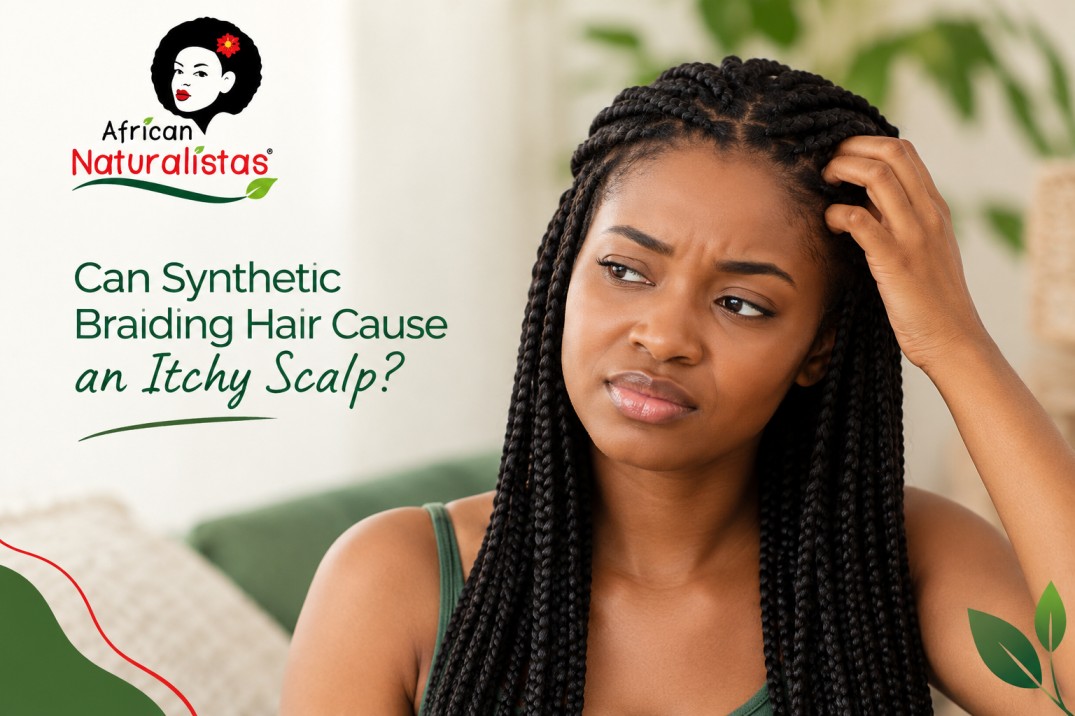
Can synthetic braiding hair cause an itchy scalp? Yes, it can contribute to itching or irritation for some people. Certain synthetic hair fibres, surface coatings, or chemical residues may irritate a sensitive scalp. However, synthetic hair is not always the cause. Tight braids, sweat, product buildup, dryness, and existing scalp conditions can also leave your scalp feeling itchy while you wear a protective style.
If you have ever spent time getting your braids done, admired how good they looked, and then found yourself scratching your scalp a few hours or days later, you probably know how frustrating that feeling can be.
You want to enjoy your new hairstyle, but your scalp seems to have other plans.
Before you assume you are allergic to synthetic hair or start applying every soothing product you can find, it helps to understand what might be happening.
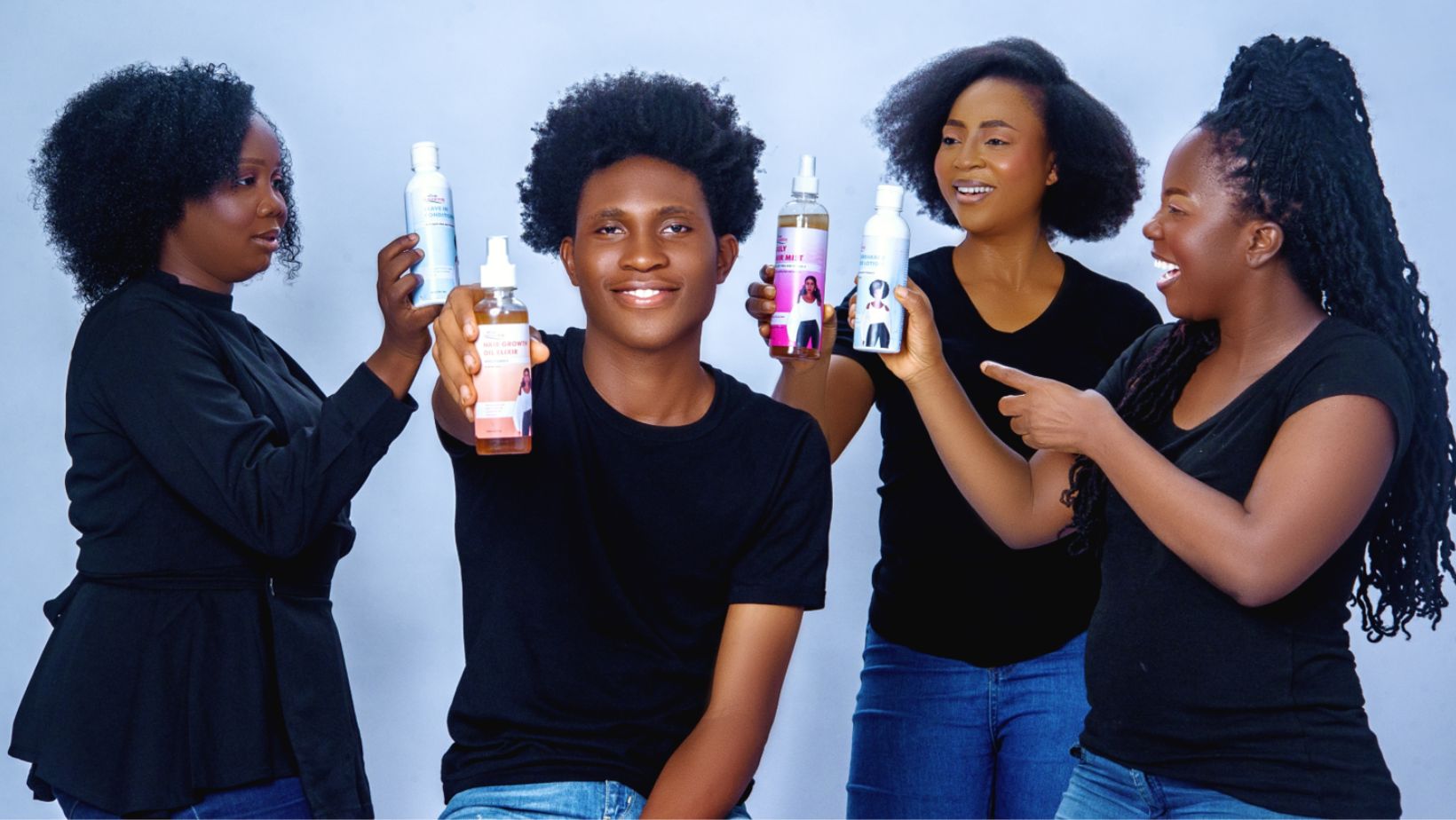
For everyday hair care between protective styles, products such as the African Naturalistas Leave-In Conditioner and Daily Hair Mist can help support your hair's moisture routine. If your hair needs more intensive conditioning after a protective style, the Deep Conditioning Mayonnaise may also fit into your wash-day routine.
These products are for caring for your hair, though. They are not a substitute for identifying the cause of scalp irritation, and applying more products directly to an irritated scalp may make things worse.
So, let's work through what could be causing that itch, how to tell the difference between common triggers, and what you can do to make your next protective style more comfortable.
Why Does Synthetic Braiding Hair Sometimes Make Your Scalp Itch?
The first thing to understand is that synthetic braiding hair is not one single material with one single formulation. Different brands and products can have different fibres, finishes, and manufacturing processes.
That means one person's experience may be completely different from another's.
Here are a few possible reasons your scalp might react after you install synthetic braiding hair.
1. Your scalp may be reacting to the hair fibres or their finish
Some synthetic braiding hair products may contain surface treatments, coatings, dyes, or manufacturing residues that irritate certain people's skin.
If your scalp is sensitive to one of these substances, you may experience itching, redness, tenderness, or a rash after the hair is installed.
This does not automatically mean you have an allergy to all synthetic hair. Irritation and allergic contact dermatitis are different reactions, and they can look similar. A dermatologist can help determine whether an allergy is involved, sometimes through patch testing.
If the itching starts soon after installing a new brand of braiding hair, pay attention to that timing. It may offer a useful clue, although it cannot confirm the cause on its own.
2. Your braids may be too tight
Now, let's consider something that has nothing to do with the material of the braiding hair itself: how the style was installed.
Have you ever felt pain while your braids were being done, only to tell yourself that you would get used to them?
That is worth reconsidering.
Braids that pull tightly at the roots can put excessive tension on your scalp and hair follicles. You may notice soreness, bumps, tenderness, or an uncomfortable pulling sensation.
Tight braids can also contribute to traction alopecia, a form of hair loss caused by repeated tension on the hair.
A protective style should not leave your scalp in pain. If your braids hurt, feel excessively tight, or cause bumps around your hairline, do not assume you simply need to endure the discomfort.
The style may need to be loosened or removed, particularly if the symptoms are significant or getting worse.
3. Sweat, oil, and product buildup may be contributing
Even if the synthetic hair itself is not irritating your scalp, everything happening underneath the style can affect how your scalp feels.
Sweat, sebum, dead skin cells, and styling products can accumulate around your scalp and roots. If cleansing becomes difficult while your hair is braided, that buildup may contribute to discomfort or aggravate an existing scalp condition.
This is particularly worth considering if the itching develops gradually rather than immediately after installation.
You might notice that your scalp feels uncomfortable after exercise, hot weather, or several weeks of wearing the same style.
The answer is not necessarily to wash your braids every day or aggressively scratch your scalp. It is to choose a style and maintenance routine that allow you to keep your scalp reasonably clean without damaging your hair or disturbing the braids unnecessarily.
4. Your scalp may already be dry or irritated
Sometimes, the braiding hair gets the blame for a problem that was already developing.
If your scalp was dry, flaky, or itchy before installation, adding a protective style may make it harder to identify or manage the original problem.
Conditions such as dandruff, seborrhoeic dermatitis, eczema, and psoriasis can cause scalp itching and flaking. Braiding does not automatically cause these conditions, but the style and its maintenance can make symptoms more noticeable or difficult to manage.
This is why it helps to think about what your scalp was like before you installed your braids.
If it was already uncomfortable, the synthetic hair may not be the whole story.
How Can You Tell Whether the Braiding Hair Is the Problem?
Now that we have covered the main possibilities, let's make this more practical.
You do not need to diagnose yourself, but you can pay attention to the pattern of your symptoms.
If the itching begins shortly after installation, especially when you use a particular brand of synthetic hair, the fibre, its finish, or another product used during installation could be contributing.
If your scalp hurts while the braids are being installed or immediately afterwards, excessive tension is a stronger possibility.
If the itching develops gradually, particularly alongside sweat, flakes, or product buildup, your scalp maintenance or an existing scalp condition may be involved.
If you develop a rash, swelling, persistent redness, or bumps, do not assume that the problem is simply dry scalp. Irritation, allergic reactions, folliculitis, and other conditions can produce overlapping symptoms.
These patterns are clues, not proof. Several causes can occur together, too. For example, tight braids and an irritating hair product can both contribute to discomfort.
If you experience severe pain, spreading redness, pus, significant swelling, or worsening symptoms, seek medical advice promptly. Facial swelling or difficulty breathing after an exposure requires emergency medical attention.
With those possibilities in mind, the next step is to look at what you can actually change.
What Should You Do If Your Scalp Itches After Installing Synthetic Braiding Hair?
The right response depends on how severe the itching is and what else you are experiencing.
Start by taking the symptoms seriously
If the itching is mild, pay attention to when it started and whether anything else changed in your routine.
But if the itching is intense, persistent, or accompanied by a rash, swelling, painful bumps, or sores, do not keep trying to manage it with more products.
You may need to remove the braiding hair and have your scalp assessed by a healthcare professional. If you suspect an allergic reaction, avoid using the suspected product again until you have received appropriate advice.
You should not have to endure an uncomfortable scalp just to preserve a hairstyle.
Avoid scratching aggressively
I know it can be difficult to leave an itchy scalp alone. Scratching may provide temporary relief, but aggressive scratching can damage the skin and create additional irritation.
Try not to use your fingernails, comb handles, or sharp objects to dig between your braids.
If you are constantly reaching for your scalp because the itch is becoming unbearable, that is a sign to investigate the cause rather than simply finding another way to scratch it.
Be careful about what you apply
When your scalp feels uncomfortable, it is tempting to reach for oils, sprays, creams, or home remedies.
But more products do not necessarily mean more relief.
Fragrances, essential oils, certain ingredients, and heavy product layers can irritate some scalps. Applying several new products at once can also make it harder to identify what is triggering the reaction.
If you suspect the braiding hair or a styling product is causing irritation, avoid adding more products to the affected area in an attempt to cover up the symptoms.
Once your scalp has settled and you have identified what it needs, you can build a more suitable hair-care routine.
How Can You Keep Your Scalp Comfortable While Wearing Braids?
Let's move from managing the itch to preventing avoidable discomfort next time.
You cannot guarantee that every protective style will be irritation-free, but a few sensible choices can help reduce common triggers.
Choose braiding hair carefully
If you have noticed a reaction to a particular brand or type of synthetic hair, do not ignore that experience.
Consider avoiding that product and looking into alternative braiding materials or products with clearer information about their composition and intended use.
Be cautious with claims that a particular washing or soaking method makes every synthetic braiding hair product safe. There is no universal home treatment that guarantees the removal of every potential irritant.
If you have a history of allergic reactions or significant scalp sensitivity, a dermatologist can advise you on appropriate precautions.
Ask for a comfortable installation
Before your next appointment, let your stylist know that your scalp has been itchy or sensitive.
Ask for a style that does not pull excessively at your roots or hairline. Your braids should not cause significant pain, and your scalp should not feel as though it is being stretched.
Also, avoid keeping a style simply because it still looks good if your scalp is telling you something is wrong.
Maintain a realistic scalp-care routine
Your scalp still needs care while your hair is braided.
Follow a gentle cleansing routine suitable for your hairstyle, and make sure your scalp can dry properly after washing. Avoid leaving it persistently damp under a style.
You may also need to adjust your routine depending on how much you sweat, how long you wear your braids, and whether you have a scalp condition that requires specific treatment.
If you regularly experience itching or flaking, consider speaking with a dermatologist rather than repeatedly switching between oils and shampoos without knowing what you are treating.
What About Moisturising Your Hair While It Is Braided?
Here is where we need to separate two things that are often treated as the same problem: your scalp and your hair.
Your scalp is the skin beneath the braids. Your hair still needs appropriate conditioning and moisture, but applying a moisturising product to your hair does not necessarily treat an itchy scalp.
For example, the African Naturalistas Daily Hair Mist can be part of a routine for refreshing your hair, while the Leave-In Conditioner supports conditioning and manageability.
When using either product, follow its directions and avoid applying it to irritated skin unless the product is specifically intended for that use.
If your scalp is already reacting to something, do not assume that adding moisture will solve the problem. First, identify and address the likely trigger.
And once your braids come down, your hair may benefit from a gentle wash and a conditioning routine that helps restore manageability after weeks of styling.
The Deep Conditioning Mayonnaise can be considered as part of that post-style conditioning routine. It is a hair-conditioning product, not a treatment for an itchy or inflamed scalp.
What Should You Do After Taking Down Your Braids?
Removing your braids is not the end of the process. It is also an opportunity to check how your scalp and hair have been doing.
Start by taking the braids down gently. Avoid pulling out shed hairs or forcing knots apart, particularly around your hairline.
Next, cleanse your scalp and hair gently, using a shampoo suitable for your needs. Follow with conditioning and detangle patiently in sections.
If your hair feels dry or difficult to manage, introduce your usual moisturising and conditioning products gradually rather than layering everything on at once.
For a simple routine, the African Naturalistas Starter Pack may be worth exploring for general hair care. If your main concern is breakage, the Breakage Be Gone routine may also fit into your hair-care plan.
For younger family members, the Early Starters Natural Hair Shampoo and Early Starters Leave-In Conditioner are options within the children's hair-care range.
These products support routine hair care; they should not be treated as remedies for allergic reactions or scalp disease.
If you notice persistent itching, unusual shedding, thinning around the hairline, or painful bumps after removing your braids, arrange an assessment rather than assuming your scalp simply needs more moisture.
Can Synthetic Braiding Hair Damage Your Natural Hair?
Synthetic braiding hair does not automatically damage your natural hair. The effect depends on factors such as installation tension, how the style is maintained, how long it is worn, and whether the hair or scalp reacts to the materials or products involved.
The biggest concern is often how the style affects your scalp and hair over time.
Excessive tension can contribute to breakage and traction alopecia. Rough take-downs can cause unnecessary breakage. And persistent inflammation or scratching can injure the scalp.
If you enjoy braids, you do not necessarily need to give them up forever. Instead, pay attention to how your scalp responds, choose comfortable styles, and remove a style when it is causing significant or worsening symptoms.
And remember: a style is not truly protective if maintaining it means ignoring pain, irritation, or ongoing hair loss.
The Bottom Line: Your Scalp Should Feel Comfortable, Too
So, can synthetic braiding hair cause an itchy scalp?
Yes, it can contribute to itching or irritation in some people, but it is not the only possible cause. Tight braids, sweat, product buildup, dryness, and existing scalp conditions can also be responsible.
The most useful thing you can do is pay attention to when the itching begins, what other symptoms appear, and whether the style or products you are using could be contributing.
Avoid aggressive scratching and adding multiple new products to irritated skin. If the symptoms are severe, persistent, or accompanied by a rash, painful bumps, swelling, or hair loss, seek professional advice.
You can still enjoy protective styles while being thoughtful about your scalp.
The goal is not just to have braids that look good. It is to make sure your scalp and natural hair are being cared for underneath them, too.
Frequently Asked Questions
Can synthetic braiding hair cause an itchy scalp?
Yes. Some synthetic braiding hair products may contain fibres, coatings, dyes, or residues that irritate certain people's scalps. However, tight braids, sweat, buildup, dryness, and scalp conditions can also cause itching.
How do I know if I am allergic to synthetic braiding hair?
Itching accompanied by redness, a rash, swelling, or other skin symptoms may suggest irritation or an allergic reaction, but symptoms alone cannot confirm an allergy. A dermatologist can assess the reaction and may recommend patch testing.
Should I wash synthetic braiding hair before installing it?
Some people choose to wash or soak braiding hair before installation, but the safest approach depends on the specific product and its manufacturer's guidance. No home method guarantees that all potential irritants will be removed. If you have had a significant reaction, avoid reusing the suspected product and seek medical advice.
Why does my scalp itch after getting braids?
Possible causes include irritation from the braiding hair or styling products, excessive tension, sweat, product buildup, dryness, or an existing scalp condition. When the itching begins and whether other symptoms appear can help you decide what to investigate.
Should I remove my braids if my scalp is itchy?
If the itching is severe, persistent, worsening, or accompanied by a rash, swelling, painful bumps, sores, or significant discomfort, removing the braids may be necessary. Seek medical advice, especially if symptoms continue or you notice hair loss.
Can I apply oil to an itchy scalp under braids?
Oil is not a universal treatment for scalp itching. Some oils or their added fragrances may irritate sensitive skin, and heavy application can contribute to buildup. It is better to identify the cause of the itching before adding products.
Can I use leave-in conditioner on my scalp while wearing braids?
Only apply a product to your scalp if its directions support that use and your scalp is not reacting to it. Leave-in conditioners are generally intended to condition the hair; they are not automatically suitable for treating an itchy or inflamed scalp.
How can I prevent an itchy scalp the next time I get braids?
Choose braiding hair carefully, avoid styles that pull tightly, maintain a suitable cleansing routine, and pay attention to how your scalp responds. If you have reacted to a particular hair product before, avoid assuming that the same product will be safe next time.
When should I see a dermatologist about an itchy scalp?
Seek professional advice if itching persists, keeps returning, interferes with sleep, or occurs with a rash, painful bumps, sores, swelling, or hair loss. Severe or worsening symptoms should not be managed by repeatedly trying new hair products.