If your hair feels clean after shampooing but somehow also feels dry, stiff or difficult to detangle, your shampoo may be doing a little too much.
For people with natural, curly, coily, kinky or loc’d hair, choosing between a sulphate shampoo and a sulphate-free shampoo can make a noticeable difference to how the hair feels after wash day.
So, which one should you use?
For most textured hair, a sulphate-free shampoo is the better choice for regular cleansing because it cleanses without removing too much of the hair’s natural moisture. However, a stronger sulphate shampoo can occasionally be useful when you’re dealing with heavy product buildup or need a deeper cleanse.
The important thing is not to label one type of shampoo as universally “good” and the other as “bad”. Your scalp, your styling routine and how much product you use should all influence what you reach for on wash day.
Let’s break it down properly.
What Is the Difference Between Sulphate and Sulphate-Free Shampoo?
Difference between sulphate and sulphate-free shampoo
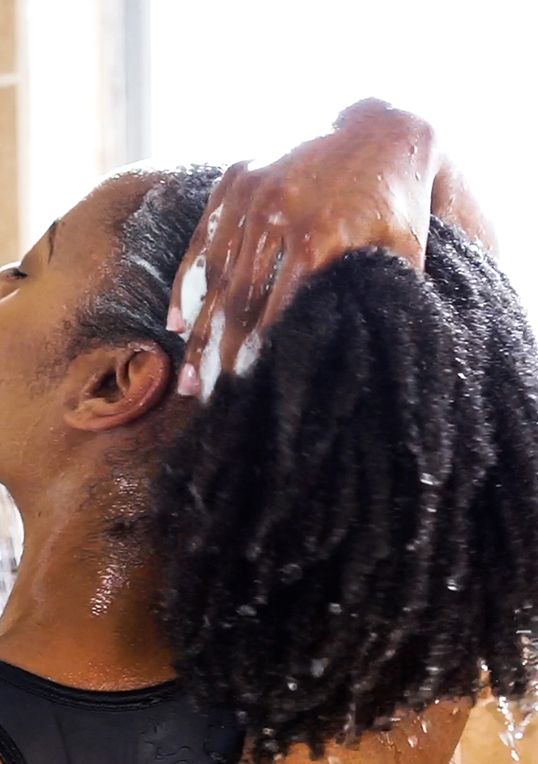
The main difference is how strongly the shampoo cleanses.
Sulphates are cleansing agents commonly added to shampoos because they are very effective at removing oil, dirt and product residue. They are also responsible for the rich, foamy lather many people associate with freshly washed hair.
That strong cleansing action can be useful, particularly when your scalp has accumulated layers of gel, edge control, oils, butters or other styling products.
The downside is that some sulphate shampoos can cleanse more aggressively than textured hair needs during every wash. Hair may feel squeaky clean at first but dry, rough or difficult to manage afterwards.
A sulphate-free shampoo, on the other hand, uses alternative cleansing ingredients designed to remove dirt and buildup more gently.
It may not always produce the dramatic foam people expect from traditional shampoo, but that does not mean your hair is not being cleaned.
For many people with curly and coily hair, the gentler approach makes it easier to maintain softness and moisture between wash days.
Why Shampoo Choice Matters More for Textured Hair
Curly, coily and kinky hair has bends and curves along each strand.
Those bends are beautiful, but they also make it more difficult for the natural oils produced by your scalp to travel all the way down the hair shaft.
That is one reason textured hair can become dry more easily than straighter hair types.
Now imagine repeatedly washing already moisture-prone hair with a cleanser that removes a large amount of oil each time.
You may notice:
- Hair that feels rough immediately after washing
- More tangling during wash day
- Increased frizz
- Dry-feeling ends
- Curls or coils that feel less flexible
- Hair that needs considerably more conditioner to feel soft again
This doesn't automatically mean sulphates must disappear from your bathroom forever. It simply means your regular shampoo should match the needs of your hair.
For frequent cleansing, a gentle moisturising shampoo is often the more practical option.
The African Naturalistas Moisturizing Shampoo is sulphate-free and designed to cleanse textured hair without leaving it feeling excessively stripped.
Is Sulphate-Free Shampoo Better for Natural Hair?
For many people, yes — particularly for regular wash days.
A good sulphate-free shampoo can remove sweat, dirt and everyday product residue while helping your hair retain more of the moisture it needs to remain manageable.
This can be especially helpful if your hair is:
- Naturally curly or coily
- Frequently dry
- Colour-treated
- Chemically processed
- Prone to tangling
- Prone to breakage
- Washed frequently
The goal is not to avoid cleansing properly.
Healthy hair still needs a clean scalp.
The goal is to clean your hair without making moisture replacement harder than it needs to be.
Does Sulphate-Free Shampoo Actually Clean the Scalp?
Yes.
One common misconception is that shampoo has to produce lots of foam before it is actually cleaning.
It doesn't.
Lather can make shampoo feel satisfying to use, but the amount of foam is not a reliable measure of how clean your scalp is.
A well-formulated sulphate-free shampoo can effectively remove everyday dirt, sweat, excess oil and styling residue.
What matters is using it properly.
Concentrate your shampoo mainly on the scalp rather than aggressively scrubbing the length of your hair. Massage gently with your fingertips, rinse thoroughly and repeat if necessary.
As the shampoo rinses away, it will cleanse the rest of the hair without unnecessary manipulation.
When Might a Sulphate Shampoo Be Useful?
Sulphate shampoo can still have a place in a textured hair routine.
Think of it as an occasional deeper clean rather than something every person needs every wash day.
You may want a stronger cleanse when you have:
Heavy Product Buildup
If your routine involves a lot of gels, oils, styling creams, edge control, mousse or butters, residue can gradually collect on your strands and scalp.
You may notice that your hair feels coated, unusually heavy or difficult to moisturise.
A deeper cleanse can help reset the hair.
A Scalp That Still Feels Coated After Washing
Sometimes your usual gentle shampoo simply isn't removing everything.
Rather than repeatedly shampooing with the same product, an occasional clarifying wash may be more effective.
Locs With Significant Buildup
Locs can hold onto product residue, lint and debris differently from loose hair.
If you have locs and regularly use heavier products, occasional deeper cleansing may be useful.
However, this does not mean every person with locs needs a strong sulphate shampoo every wash day.
Your cleansing schedule should depend on your scalp, products and lifestyle.
When Is Sulphate-Free Shampoo the Better Choice?
How To Know If You Need Sulphate-Free Shampoo
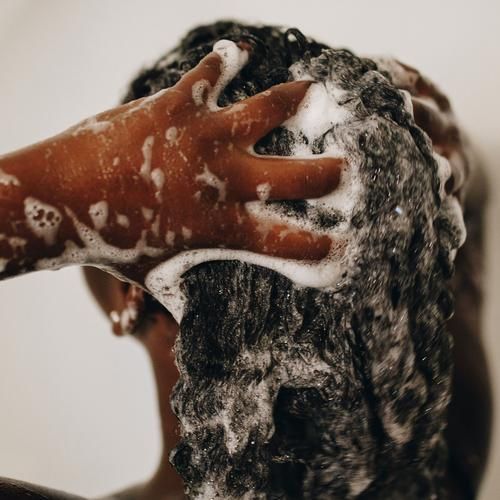
A sulphate-free shampoo is worth considering if you constantly find yourself saying:
"Why does my hair feel dry immediately after washing it?"
It may also be a better everyday option if:
- Your curls feel rough after shampooing
- Your coils become tangled very easily
- Your scalp needs cleansing but your strands are already dry
- You wash your hair frequently
- Your hair is colour-treated
- Your hair is prone to breakage
- You prefer a moisture-focused natural hair routine
Using a gentle cleanser such as the African Naturalistas Moisturizing Shampoo can help you cleanse without making your conditioning routine work overtime afterwards.
Can Sulphate Shampoo Cause Dry Hair?
It can contribute to dryness in some people, particularly when strong cleansers are used frequently on hair that is already naturally dry.
That does not mean every sulphate shampoo automatically damages hair.
Formula strength matters. Frequency matters. Your hair type matters. The styling products you use matter too.
Someone with an oily scalp and significant product buildup may respond very differently from someone with dry 4C hair who washes weekly and rarely uses heavy styling products.
This is why copying another person's wash routine does not always work.
Your shampoo should solve your hair's problem, not create another one.
Can You Use Both Sulphate and Sulphate-Free Shampoo?
Absolutely.
In fact, for some people with natural or textured hair, using both strategically makes more sense than choosing one side permanently.
For example, your routine might look like this:
Regular wash days: Use a moisturising sulphate-free shampoo.
When there is significant buildup: Use a stronger or clarifying cleanser.
Then return to your usual gentle cleansing routine.
You do not necessarily need to schedule a harsh cleanse simply because a certain number of weeks have passed. Pay attention to how your scalp and hair actually feel.
If your scalp is comfortable and your hair is clean, there is no prize for over-cleansing it.
What Should You Look for in a Shampoo for Textured Hair?
Don't choose a shampoo based on the words “sulphate-free” alone.
Look at what the product is supposed to do.
For regular natural hair care, you generally want a shampoo that:
- Cleans the scalp effectively
- Rinses out without leaving a heavy coating
- Does not leave the hair unusually rough
- Works well with your conditioner
- Makes detangling manageable
- Suits how frequently you wash your hair
- Matches the amount of styling product you normally use
Most importantly, pay attention to how your hair behaves after shampooing.
If your hair consistently feels like straw before you've even reached for your conditioner, that is useful feedback.
What About Shampoo for 4C Hair?
People with 4C hair often focus heavily on conditioners, oils and leave-ins while overlooking how much the cleansing stage affects the rest of wash day.
Because tightly coiled strands can be especially vulnerable to dryness and tangling, a gentle shampoo can make the conditioning and detangling stages noticeably easier.
There is no single shampoo that every person with 4C hair must use. However, if your main concerns are dryness, tangling or maintaining moisture, a sulphate-free moisturising shampoo is a sensible place to start.
If buildup becomes a problem, introduce occasional deeper cleansing rather than automatically switching your entire routine to a stronger shampoo.
What About Shampoo for Locs?
Locs need effective cleansing.
The idea that locs should rarely be shampooed can lead to unnecessary buildup on the scalp and within the hair.
The right cleansing approach will depend on the products you use.
If you apply minimal product and wash consistently, a gentle shampoo may be enough for most wash days.
If you frequently use oils, gels, waxy products or other heavy stylers, you may occasionally need a stronger cleanse.
And remember: shampoo residue itself can also become buildup.
Whatever cleanser you use, rinse your locs thoroughly.
How Often Should You Wash Textured Hair?
There is no universal wash schedule that works for everyone.
Your ideal frequency depends on factors such as:
- How oily your scalp becomes
- How much you exercise or sweat
- Whether you wear protective styles
- The amount of styling product you use
- Whether you have dandruff or other scalp concerns
- Your hair density and texture
Instead of following arbitrary rules such as “natural hair should only be washed every two weeks”, pay attention to your scalp.
A clean, comfortable scalp is part of healthy hair care.
Don't Confuse Moisturising With Avoiding Shampoo
There is another extreme worth avoiding.
Because people with textured hair are frequently warned about dryness, some become afraid of shampoo altogether.
But adding oils and creams to a scalp that needs cleansing does not fix the underlying problem.
Healthy hair care requires both cleansing and moisture.
You want to remove sweat, dirt, product residue and excess oils while avoiding unnecessarily aggressive cleansing.
That balance is where a good shampoo routine comes in.
So, Which Is Better: Sulphate or Sulphate-Free Shampoo?
For most people with curly, coily, kinky or naturally dry hair, a sulphate-free shampoo is a strong choice for routine cleansing.
It allows you to keep your scalp clean without unnecessarily stripping moisture from hair that may already struggle to retain it.
Sulphate shampoos can still be useful when you genuinely need a stronger cleanse, particularly after significant product buildup.
So rather than thinking:
Sulphate = bad
Sulphate-free = good
Think:
What does my hair need today?
That question will take you much further.
A Simple Wash-Day Approach for Healthy Textured Hair
A complicated hair routine is not automatically a better one.
For many people, the foundation can remain simple:
- Cleanse your scalp thoroughly.
- Choose a shampoo that matches your current level of buildup.
- Follow with adequate conditioning.
- Detangle gently.
- Moisturise and style according to your hair's needs.
- Pay attention to how your scalp and strands respond between washes.
For regular cleansing, you can try the African Naturalistas Moisturizing Shampoo as part of your natural hair wash-day routine.
Your Hair Doesn't Need Someone Else's Routine
The Balance for Healthy, Glowing Textured Hair
One person's “holy grail” shampoo can leave another person's hair miserable.
That's normal.
Hair texture, scalp condition, styling habits, environment and product use all influence what works.
The best shampoo isn't simply the one with the trendiest ingredient list. It is the one that cleans your scalp effectively while leaving your hair in a good condition for the next stage of your routine.
For many textured-hair routines, that means making a sulphate-free shampoo your regular cleanser and saving stronger cleansing for the occasions when you actually need it.
Ready to give your curls, coils or locs a gentler cleanse? Shop the African Naturalistas Moisturizing Shampoo for a moisture-conscious approach to wash day.
And if you're dealing with persistent scalp problems, unusual shedding, breakage or another hair concern that isn't improving with changes to your routine, consider booking a trichology consultation for personalised professional guidance.
Frequently Asked Questions About Sulphate-Free Shampoo
Is sulphate-free shampoo better for natural hair?
Sulphate-free shampoo is often a good choice for natural hair because it generally provides gentler cleansing. This can be particularly helpful for curly, coily and kinky hair that becomes dry easily. However, people with significant buildup may occasionally benefit from a stronger or clarifying cleanser.
Is sulphate-free shampoo good for 4C hair?
Yes, sulphate-free shampoo can work very well for 4C hair, particularly if dryness, tangling and moisture retention are concerns. The best shampoo should cleanse the scalp effectively without leaving the hair excessively dry or rough.
Does sulphate-free shampoo clean your hair properly?
Yes. Sulphate-free shampoo can remove everyday sweat, dirt, oil and product residue without relying on traditional sulphate cleansers. Less lather does not necessarily mean less cleansing.
Do sulphates damage natural hair?
Sulphates do not automatically damage natural hair. However, some strong sulphate shampoos can leave dry or textured hair feeling stripped when they are used too frequently. How your hair responds will depend on the product formulation, frequency of use and your individual hair needs.
How do I know if my shampoo is too harsh?
Your shampoo may be too harsh for regular use if your hair consistently feels unusually rough, stiff, tangled or extremely dry immediately after washing. Try switching to a gentler cleanser and compare how your hair behaves over several wash days.
Can I use sulphate shampoo once a month?
You can use a stronger cleanser occasionally if your hair needs it, but there is no universal rule that says it must be once a month. Base clarifying on the amount of buildup you have rather than following a fixed schedule.
Is sulphate-free shampoo good for locs?
Yes. Sulphate-free shampoo can be suitable for locs when it cleanses effectively and rinses out thoroughly. If you use heavy styling products or experience significant buildup, you may occasionally need a deeper cleanse.
Can I switch between sulphate and sulphate-free shampoo?
Yes. Many people use sulphate-free shampoo for regular cleansing and a stronger cleanser occasionally when they have substantial buildup. The two approaches do not have to be mutually exclusive.
Why does my natural hair feel dry after shampooing?
Your shampoo may be too strong, you may be washing too frequently, or your hair may naturally require more conditioning and moisture after cleansing. If dryness happens consistently immediately after shampooing, switching to a gentler moisturising cleanser may help.
What is the best shampoo for dry natural hair?
For dry natural hair, look for a gentle shampoo that cleanses the scalp without leaving the strands excessively rough or stripped. A moisturising sulphate-free option such as the African Naturalistas Moisturizing Shampoo can be suitable for regular wash days.