Why does my natural hair smell bad even after washing it? If your natural hair smells unpleasant shortly after wash day, the problem may not be that you didn't wash it properly. Sweat, oil, product buildup, trapped moisture, and scalp conditions can all contribute to an unpleasant smell. Sometimes, the issue is hiding in your scalp, your hair products, or even the way your hair dries after washing.
Let's talk about it, because I know how frustrating it can be to spend time washing your hair, only to notice that something still doesn't smell right.
You shampoo. You rinse. You condition. You rinse again.
Your hair feels clean, and you're ready to get on with your day.
Then, later, you catch a smell.
And you're left wondering, How? I literally just washed my hair.
If this sounds familiar, don't immediately assume you're doing something wrong. There's usually a reason your hair or scalp smells the way it does, and understanding that reason is the first step towards dealing with it.
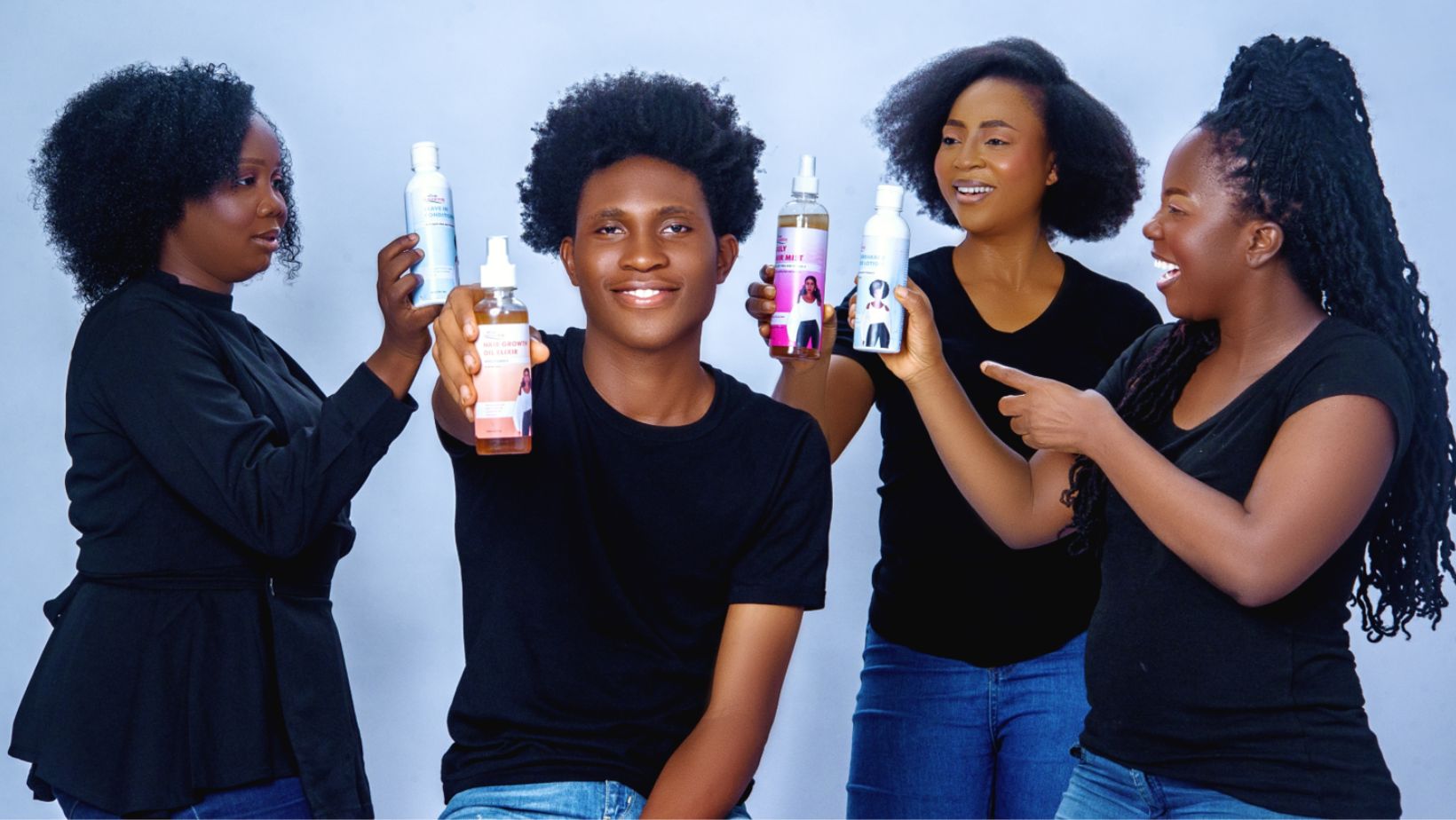
Before we get into the possible causes, here are a few African Naturalistas products you may find useful when reviewing your hair-care routine:
- African Naturalistas Natural Shampoo – for cleansing your hair and scalp.
- African Naturalistas Leave-In Conditioner – for conditioning and managing your hair after washing.
- African Naturalistas Daily Hair Mist – for refreshing your hair between wash days.
- African Naturalistas Deep Conditioning Mayonnaise – for deep conditioning as part of your regular routine.
Of course, the right product depends on what's actually causing the smell. A leave-in conditioner or hair mist, for example, won't solve an underlying scalp problem.
So let's figure out what's going on.
First, Is the Smell Coming From Your Hair or Your Scalp?
This might sound like an unnecessary question, but it's an important one.
When you say your natural hair smells bad, are you noticing the smell when you touch your scalp? When you part your hair? When you scratch your head? Or does your hair itself seem to hold an unpleasant smell even after it has dried?
The distinction matters.
Your scalp produces natural oils called sebum. It also collects sweat, dead skin cells, and residue from hair products. These things are normal, but when they accumulate, they can contribute to an unpleasant smell.
Your hair can also hold onto smells from your surroundings, styling products, smoke, cooking, and other things you come into contact with throughout the day.
So before you start changing your entire hair-care routine, take a moment to notice where the smell seems to be coming from.
If it is mainly coming from your scalp, we need to look at what's happening there.
And if your scalp seems fine but your hair smells unpleasant, we need to consider what's sitting on your strands and how you're caring for them.
Let's start with one of the most common possibilities.
1. Your Scalp May Still Have Sweat, Oil, and Product Buildup
You know how your skin can feel oily after a long day, even if you showered that morning?
Your scalp can experience something similar.
Sweat, sebum, and residue from styling products can accumulate on your scalp over time. And if you use products regularly, especially products that leave a coating on your hair, some residue may remain even after washing.
This doesn't automatically mean your shampoo is bad or that your hair is dirty.
It may simply mean your scalp needs a more suitable cleansing routine.
For example, if you use gels, creams, oils, edge-control products, or other styling products frequently, you may need to pay closer attention to how thoroughly you're cleansing your scalp.
A shampoo that works well for someone who rarely uses styling products may not be enough for someone who uses several products throughout the week.
And this is where people sometimes make the mistake of adding more products to cover up the smell.
But if the smell is coming from buildup, adding another product may only give that buildup something else to hold onto.
The goal is to address the cause of the smell, not simply make your hair smell different for a few hours.
2. Your Hair May Not Be Drying Properly After Washing
Now, let's talk about something that is easy to overlook.
How long does your hair take to dry after wash day?
If you have thick, dense, or tightly coiled hair, you may already know that drying it can take considerably longer than you expect.
And if your hair is braided, twisted, tucked into a style, or gathered into sections, some areas may take longer to dry than others.
When moisture remains trapped in your hair for an extended period, it can create conditions where an unpleasant smell develops.
This is especially worth considering if you notice that:
- Your hair smells fine immediately after washing but develops a smell later.
- The smell is stronger near the roots or in areas that take longer to dry.
- Your hair still feels damp hours after wash day.
- You regularly go to bed with wet hair.
If any of these sound familiar, take a closer look at your drying routine.
After washing, gently remove excess water with a towel or T-shirt, then allow your hair to dry thoroughly before covering it or putting it into a style that restricts airflow.
You may also want to reconsider how you handle wash day when you're in a hurry.
Because while cleansing your hair is important, getting it properly dry is part of the process, too.
And if your hair is usually tucked away in a protective style, there's another thing we need to discuss.
3. Your Protective Style May Be Making It Harder to Keep Your Scalp Clean and Dry
Protective styles can be convenient.
They can reduce the need for daily styling and make it easier to manage your hair during busy periods.
But here's something worth remembering: wearing a protective style doesn't mean your scalp stops needing care.
If you're wearing braids, twists, cornrows, or another style that makes your scalp harder to reach, cleansing and drying may require a little more attention.
Sweat and product residue can accumulate around the roots. And if your hair stays damp after washing, the areas underneath the style may take longer to dry.
This can become especially noticeable if you exercise regularly, live in a hot climate, or spend a lot of time outdoors.
So if your hair smells unpleasant while you're wearing a protective style, consider whether your scalp is being cleansed and dried appropriately.
And don't forget that a style that has become uncomfortable, excessively itchy, or difficult to maintain may need to be adjusted or removed.
You don't have to keep a hairstyle in simply because it still looks good.
Now, what if you're washing your hair regularly, drying it properly, and still noticing an unpleasant smell?
Let's look at what else could be happening.
4. Your Scalp May Have a Condition That Needs More Than Shampoo
This is an important one.
Sometimes, an unpleasant scalp smell isn't simply caused by sweat or product buildup.
Certain scalp conditions can cause changes in the scalp's oiliness, skin, and overall condition. These may include seborrheic dermatitis, folliculitis, or other inflammatory or infectious conditions.
For example, seborrheic dermatitis can cause flaky skin, redness, and irritation. Folliculitis can cause inflamed hair follicles, sometimes with small bumps or pus-filled spots.
If you notice an unpleasant smell alongside symptoms such as:
- Persistent itching.
- Redness or irritation.
- Greasy or unusual flakes.
- Painful bumps or sores.
- Swelling or discharge.
- Areas of hair loss.
It's worth seeking advice from a qualified healthcare professional or dermatologist.
Why?
Because if an underlying scalp condition is responsible, simply changing your shampoo or adding a scented hair product may not address the problem.
You may need a specific treatment based on what's causing the symptoms.
And that brings us to another mistake people sometimes make when trying to deal with an unpleasant hair smell.
5. You May Be Trying to Cover the Smell Instead of Finding the Cause
Let's be honest.
When your hair smells unpleasant, the temptation to reach for something that smells nice is understandable.
A hair mist. A leave-in conditioner. A scented oil.
And while these products can be useful for their intended purposes, they aren't substitutes for cleansing your scalp or addressing a scalp condition.
For example, African Naturalistas Daily Hair Mist can be used to refresh your hair as directed.
But if the unpleasant smell is coming from your scalp, refreshing the hair with a mist won't necessarily solve the underlying issue.
The same goes for leave-in conditioners.
A leave-in conditioner is designed to support conditioning and manageability. It's not meant to replace shampoo or treat an underlying scalp condition.
So before reaching for another product, ask yourself:
What am I actually trying to fix?
Is your hair dry and difficult to manage?
Is your scalp oily or uncomfortable?
Does your hair smell unpleasant because it hasn't dried properly?
Or are you noticing a smell that keeps returning despite regular cleansing?
Once you understand what you're dealing with, it becomes much easier to decide what your hair-care routine actually needs.
6. Your Hair Products May Be Contributing to the Smell
Here's another possibility.
Sometimes, the smell isn't coming from your scalp at all. It may be coming from a product you're using.
Hair products can accumulate on your strands, especially if you layer several products without cleansing them out regularly.
And if a product has changed in smell, texture, or appearance, don't continue using it simply because there's still some left in the bottle.
Check the product's storage instructions and expiry information.
If it smells unusual, has changed significantly, or appears contaminated, stop using it.
You should also avoid mixing products together in ways that aren't recommended by the manufacturer.
And if you notice that the smell develops specifically after using a particular product, consider whether that product could be contributing to the issue.
This doesn't mean every oil, cream, or leave-in conditioner is bad for your hair.
It simply means you need to understand how your products fit into your routine and whether they're appropriate for your hair and scalp.
Now that we've covered the possible causes, let's talk about what you can actually do.
How to Stop Your Natural Hair From Smelling Bad After Washing
The first thing I'd recommend is not buying five new products.
Start by reviewing your routine.
Cleanse your scalp thoroughly
Use a shampoo that's suitable for your hair and scalp.
Pay attention to the scalp itself rather than concentrating only on the length of your hair.
If you use a lot of styling products, you may need to adjust your cleansing routine to remove the residue effectively.
African Naturalistas Natural Shampoo is one option to explore as part of your cleansing routine.
Make sure your hair dries properly
After washing, gently remove excess water and allow your hair to dry thoroughly.
Don't rush to cover it while it's still damp.
If your hair takes a long time to dry, consider how you can give it more time and airflow.
Keep your routine appropriate for your hair
Conditioning is important, but you don't need to apply every product you own after every wash.
Choose products based on what your hair needs.
For example, if your hair needs conditioning and manageability, a leave-in conditioner may be useful.
If you're refreshing your hair between wash days, a hair mist may be appropriate.
If your hair needs deeper conditioning, you may want to consider a deep conditioning treatment as part of your routine.
African Naturalistas offers products such as:
Remember, these products support different parts of your hair-care routine. They aren't treatments for an unexplained scalp smell.
Pay attention to your scalp between wash days
If you wear protective styles, make sure you're still able to maintain your scalp appropriately.
Avoid piling on products whenever your scalp feels itchy.
And if your scalp becomes persistently uncomfortable, don't assume you just need another moisturiser.
Seek professional advice when the smell keeps returning
If your hair or scalp continues to smell unpleasant despite appropriate cleansing and drying, or you notice other symptoms, consider consulting a dermatologist.
You don't have to keep guessing.
Frequently Asked Questions
Why does my natural hair smell bad even after washing?
Your natural hair or scalp may smell unpleasant after washing because of sweat, oil, product buildup, trapped moisture, or an underlying scalp condition. The cause depends on where the smell is coming from and whether you have other symptoms.
Why does my scalp smell bad even when my hair is clean?
Your scalp produces natural oils and collects sweat and dead skin cells. Product residue may also accumulate. Some scalp conditions can contribute to unpleasant smells, particularly if you notice itching, irritation, flakes, or bumps.
Why does my natural hair smell bad when it gets wet?
If your hair develops an unpleasant smell when wet, it may be holding onto residue, environmental smells, or moisture-related odours. If the smell is persistent or comes from your scalp, consider whether your cleansing and drying routine is appropriate and seek professional advice if necessary.
Can protective styles make natural hair smell bad?
Protective styles don't automatically cause unpleasant smells. However, if your scalp is difficult to cleanse, sweat and product residue accumulate, or your hair stays damp for a long time, an unpleasant smell may develop.
Can leave-in conditioner make my natural hair smell bad?
A leave-in conditioner may contribute to product buildup if it's not suitable for your routine or if you layer products without cleansing them out regularly. If a product itself develops an unusual smell, stop using it.
Can I use hair mist to get rid of the smell?
Hair mist can refresh your hair, but it won't necessarily address the cause of an unpleasant scalp smell. If the smell comes from buildup, trapped moisture, or a scalp condition, you'll need to address that issue.
Should I wash my natural hair more often if it smells bad?
Not necessarily. The appropriate washing frequency depends on your scalp, hair, lifestyle, and products. If the smell is persistent despite regular cleansing, investigate the cause rather than simply washing more frequently.
When should I see a dermatologist about my scalp smell?
Seek professional advice if the smell persists despite appropriate cleansing and drying, or if you notice itching, redness, painful bumps, sores, discharge, swelling, or unexplained hair loss.
The Most Important Thing to Remember
If your natural hair smells bad even after washing, don't immediately assume you need a stronger shampoo or another scented product.
First, figure out where the smell is coming from.
Check your cleansing routine. Pay attention to how your hair dries. Consider whether product buildup or a protective style could be contributing.
And if the smell keeps returning or comes with other scalp symptoms, don't ignore it.
Your hair-care routine should help you care for your hair and scalp—not leave you constantly trying to cover up a problem you haven't identified.
Once you understand what's causing the smell, you can make more informed decisions about what your hair actually needs.