Is it actually more expensive to maintain natural hair than relaxed hair in Nigeria?
Not necessarily. Natural hair isn't automatically more expensive to maintain than relaxed hair. The amount you spend depends on your hair's needs, the products you use, how often you visit the salon, your preferred hairstyles, and how much of your routine you handle yourself.
Natural hair may require more time for detangling, moisturising, and styling, while relaxed hair comes with its own costs, including chemical touch-ups, conditioning treatments, and regular maintenance. Neither is automatically the cheaper option.
Now, that's the straightforward answer. But if you've ever stood in front of a shelf full of hair products wondering how much more money your hair wants from you, you'll probably agree that this conversation deserves more than a simple yes or no.
Because let's face it, natural hair can sometimes feel expensive.
You buy a shampoo, conditioner, leave-in conditioner, and hair moisturiser. Then someone recommends a hair oil. Before you know it, you've added three more products to your shopping basket because somebody on Instagram said they transformed her hair.
Meanwhile, your friend with relaxed hair seems to be getting by with a few products and an occasional salon visit.
So you start wondering: Am I spending too much because my hair is natural, or am I simply doing too much?
That's the question we really need to answer.
First, Let's Talk About What Natural Hair Actually Needs
One of the biggest misconceptions about natural hair is that maintaining it requires a complicated routine and a bathroom shelf overflowing with products.
It doesn't.
Natural hair needs regular cleansing, conditioning, moisture management, and gentle handling. How you achieve those things will depend on your hair's texture, condition, length, density, and styling habits.
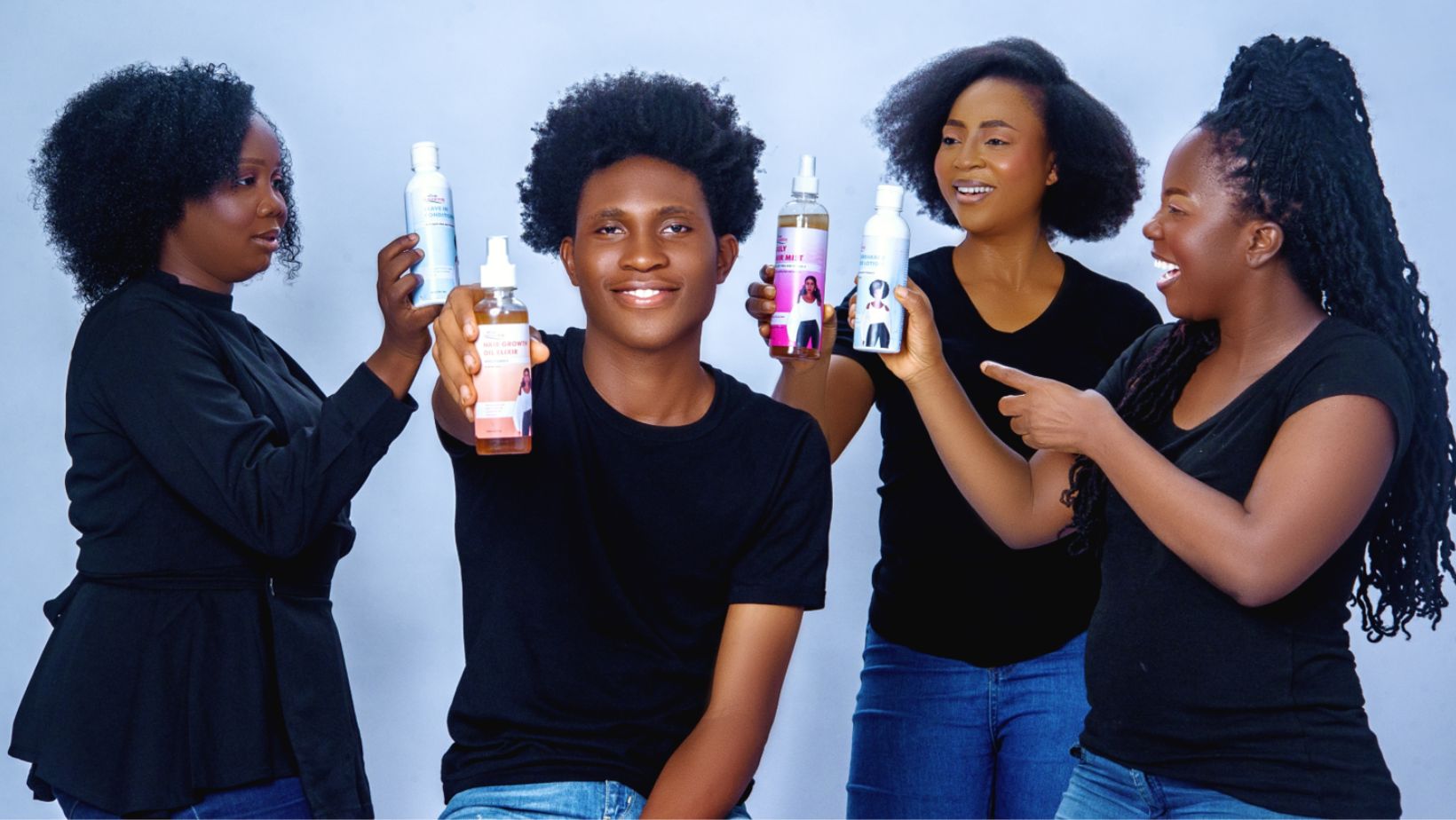
For example, if your hair frequently feels dry, a suitable Leave-In Conditioner can help improve softness and make detangling easier.
If your hair needs refreshing between wash days, a lightweight Daily Hair Mist may be useful without requiring you to start your entire wash-day routine again.
And when your hair needs more intensive conditioning, particularly if it feels dry or difficult to manage, a treatment such as Deep Conditioning Mayonnaise can become part of your wash-day routine.
Notice something?
Each product has a purpose.
That's very different from buying several products that essentially do the same thing.
You don't necessarily need three leave-in conditioners, four moisturisers and five different oils just because they're popular.
If you're still trying to figure out which products work together, the African Naturalistas Starter Pack brings together products for cleansing, conditioning and regular maintenance.
A coordinated routine can make product selection easier, but the important part is understanding what you're buying and why.
And that brings us to one of the biggest reasons natural hair sometimes appears more expensive than relaxed hair.
Are You Paying for Hair Care or for Every New Hair Trend?
Think about the last time you bought a hair product.
Did you buy it because your hair genuinely needed it, or because somebody online made it look irresistible?
There's nothing wrong with trying something new. Sometimes, discovering the right product makes a noticeable difference to your routine.
But constantly replacing products before you've understood how they work can become expensive.
Imagine buying a moisturiser today, using it twice, and abandoning it next week because you've seen another one trending online.
You haven't necessarily discovered that the first moisturiser doesn't work. You may simply not have given yourself enough time to understand how it performs on your hair.
The same applies to oils.
For instance, Hair Growth Oil Elixir is formulated to support scalp and hair care. But an oil doesn't automatically need to be part of everyone's daily routine, and using more oil doesn't mean your hair will grow faster.
Your hair's needs should determine your purchases, not the number of recommendations appearing on your social media feed.
And before you think this only happens to women with natural hair, it happens with relaxed hair too.
Relaxed hair can also become expensive when you're constantly purchasing new treatments, serums, styling products, and salon services without a clear reason.
The real issue isn't always your hair type. Sometimes, it's your shopping habits.
But Doesn't Natural Hair Require More Salon Visits?
This is where things get interesting because the answer depends on the kind of hairstyles you enjoy.
If you prefer wearing your natural hair in twists, a puff, an afro, or other styles you can manage yourself, you might spend relatively little on salon visits.
However, if you regularly install braids, extensions, wigs, or elaborate protective styles, your monthly styling expenses can increase considerably.
And we all know that some hairstyles aren't exactly cheap, especially when you include the cost of extensions, installation and maintenance.
Relaxed hair isn't automatically free from those expenses either.
Someone with relaxed hair might spend money on retouching new growth, professional treatments, trims, styling, and protective hairstyles.
A person who relaxes her hair regularly and visits the salon for additional treatments may spend more than someone who maintains natural hair at home.
On the other hand, someone who frequently pays for elaborate natural hairstyles may spend more than a relaxed-haired person who keeps a simple routine.
So rather than asking whether natural hair or relaxed hair requires more salon visits, a better question is:
How much of your hair maintenance are you paying someone else to do?
Learning to wash, detangle, moisturise, and create a few simple hairstyles at home can reduce expenses, regardless of whether your hair is natural or relaxed.
You don't need to become a professional stylist. Knowing how to manage your everyday routine already makes a difference.
What About Hair Breakage, Thinning Edges and Difficult-to-Manage Hair?
Now, let's discuss another situation that can affect how much you spend.
Sometimes, your hair-care expenses increase because you're trying to address a particular problem.
Maybe your hair breaks easily. Perhaps your edges are thinning, or wash day has become a struggle because your hair tangles excessively.
When that happens, buying random products usually isn't the most sensible approach.
It's better to understand the problem first.
For hair that is dry, fragile, or prone to breakage, the Breakage Be Gone Set combines products designed to support moisture management and reduce breakage.
If your major concern is rough, tangled, or difficult-to-manage hair, the Stubborn No More Set focuses on conditioning, softness, and easier detangling.
And for people concerned about thinning edges, the Fertile Edges Set offers a more targeted hair-care routine.
These products address different concerns, which is exactly the point.
You don't need all three sets simply because they exist. You need to identify what your hair actually requires.
It's also important to understand that hair products cannot solve every hair-loss problem. Tight hairstyles, scalp conditions, hormonal changes, and other factors can contribute to thinning or breakage. Persistent hair loss, painful scalp symptoms, or unexplained bald patches deserve professional assessment.
Spending money on the wrong solution repeatedly can be much more expensive than taking time to understand the underlying issue.
The goal should always be appropriate care, not an ever-growing collection of products.
And If You're Maintaining Your Child's Natural Hair?
Parents, this part is for you.
Children's natural hair sometimes gets labelled expensive because of the time, products, and effort involved in keeping it neat, soft, and manageable.
But children's hair routines don't have to be complicated either.
Gentle cleansing, suitable conditioning, careful detangling and comfortable hairstyles are a good starting point.
For instance, Early Starters Natural Shampoo is designed for gentle cleansing of children's hair and scalp, while Early Starters Leave-In Conditioner helps with softness and manageability.
You don't need to create an elaborate routine for a child simply because her hair is natural.
And you certainly don't need to pull her hair into tight styles just to make it look neat for longer.
A simple, comfortable hairstyle that protects her scalp and reduces daily manipulation can be a much better choice.
Remember, children's hair should be cared for according to their needs, not adult beauty trends.
So, Is Relaxed Hair Actually Cheaper to Maintain?
Let's give relaxed hair a fair comparison.
One reason people sometimes believe relaxed hair is cheaper is that it may be easier for them to comb, detangle, and style after chemical straightening.
For someone who previously spent several hours detangling natural hair, that difference can feel significant.
But easier styling doesn't necessarily mean lower maintenance costs.
Relaxed hair still requires cleansing, conditioning, moisture management, and careful handling. Chemical straightening also changes the hair's structure, and improper processing can increase the risk of breakage and scalp irritation.
Retouching new growth is another recurring expense.
Depending on how frequently someone relaxes her hair and whether she uses professional salon services, those costs can add up over time.
There's also the cost of maintaining the condition of the hair between chemical treatments.
So although relaxed hair may reduce certain styling challenges for some people, it doesn't eliminate the need for a proper hair-care routine.
And natural hair, despite requiring more detangling or styling time for some people, doesn't come with the recurring cost of chemical relaxer applications.
Both choices involve trade-offs.
Neither deserves to be called cheaper without considering the person's actual routine.
Let's Compare the Real Costs, Not Just the Price of Products
Imagine two women.
The first has natural hair. She washes and conditions it at home, wears relatively simple hairstyles, and purchases products only when she needs to replace them.
The second has relaxed hair. She visits a salon regularly for touch-ups, styling, and treatments.
In that situation, the woman with natural hair might spend less.
Now reverse the situation.
The woman with natural hair frequently installs expensive braids and extensions, buys several new products every month, and visits specialist salons.
The woman with relaxed hair maintains a simple routine and pays for professional chemical services only when necessary.
This time, the relaxed-haired woman might spend less.
Do you see why the comparison isn't as straightforward as people make it sound?
The cost of maintaining your hair depends on your choices and circumstances.
And when you're calculating those costs, consider more than the amount you spend at the checkout.
Think about:
- Products: How often do you replace your shampoo, conditioner, and moisturiser?
- Salon services: How much do you spend on styling, treatments, and maintenance?
- Hair extensions: Are braids, wigs, or additional hair part of your regular spending?
- Time: How much time does your routine require, and does that affect your schedule?
- Corrective care: Are you repeatedly spending money to address avoidable damage or unsuitable routines?
These expenses tell you far more than simply comparing the price of a natural hair cream with a tub of relaxer.
The Price of a Product Isn't the Same as Its Cost Per Use
Here's something that doesn't get discussed enough.
A product may look expensive when you first buy it, but that doesn't tell you how much it costs to use.
Suppose you buy a conditioner that lasts four months.
Now compare it with another conditioner that costs less upfront but finishes in four weeks because you need to use significantly more.
The cheaper product might end up costing you more over time.
A simple way to think about this is:
Cost per use = Product price ÷ Number of applications
For example, if a product costs ₦6,000 and lasts 20 applications, that's ₦300 per application.
If another product costs ₦4,000 but lasts only eight applications, that's ₦500 per application.
Those are hypothetical figures, but the principle is useful.
Of course, the number of applications depends on your hair length, density, how much product you use, and the product's instructions.
Still, understanding cost per use can help you make better purchasing decisions.
And it also explains why buying a larger size or a coordinated set may sometimes be more economical, provided you'll actually use the products before they expire.
You're not saving money if half your purchase ends up sitting unused on a shelf.
How to Maintain Natural Hair Without Overspending
At this point, you might be wondering what you should actually do differently.
Start by looking at your current routine rather than searching for another product recommendation.
First, identify your main hair concern. Is your hair dry? Does it tangle easily? Are you experiencing breakage, or are you simply trying to maintain healthy hair?
Your answer should guide your routine.
Next, keep your everyday products manageable. A suitable cleanser, conditioner, and moisturising routine is a sensible foundation. Add treatments or specialised products when there's a clear need for them.
Then, pay attention to how much product you're using. More product isn't always better. Sometimes, using an excessive amount simply means you're spending more money and making your hair feel unnecessarily heavy.
Give your routine a fair chance. If a product suits your hair and you're using it correctly, don't abandon it every time something new becomes popular.
Finally, be realistic about your styling budget. You can enjoy elaborate hairstyles occasionally without making them your default every month.
And please don't forget the basics: gentle detangling, avoiding excessive tension, and keeping your scalp clean.
These habits matter whether you're natural or relaxed.
What If You Actually Prefer Relaxed Hair?
Then wear your relaxed hair.
There shouldn't be pressure to keep natural hair simply because it's considered fashionable, just as nobody should feel obligated to relax their hair because someone thinks natural hair is difficult.
Hair care is personal.
Some people genuinely enjoy caring for their natural curls, coils, and kinks. Others prefer the convenience or appearance of relaxed hair.
Neither choice makes someone more committed to caring for their hair.
What's important is understanding the maintenance involved and choosing a routine that works for your hair, lifestyle, and budget.
If you choose to relax your hair, take chemical processing seriously, follow product safety guidance, and consider a qualified professional for application.
If you choose to remain natural, learn how to work with your texture rather than constantly trying to force it to behave like someone else's.
Your hair shouldn't have to look like another person's hair for you to feel that you're taking good care of it.
So, Which One Is More Affordable in the Long Run?
Natural hair can be affordable. Relaxed hair can be affordable too.
Natural hair can also become expensive, just as relaxed hair can.
The difference often comes down to how you care for your hair and the choices you make along the way.
If you're spending a lot on natural hair, that doesn't automatically mean your hair is too difficult or expensive to maintain.
It may simply be time to review your routine, identify unnecessary expenses, and focus on products and practices that genuinely serve your needs.
At African Naturalistas, we believe caring for your hair should be practical and accessible. That philosophy is part of why the brand was created in the first place.
You should be able to enjoy your hair without feeling that every wash day requires a major financial investment.
And if there's one thing we'd love you to take away from this conversation, it's this:
You don't need the most expensive hair routine. You need a routine that works for you.
Whether your hair is natural or relaxed, consistency, gentle care and sensible purchasing decisions will usually take you further than constantly chasing the next product trend.
Frequently Asked Questions
Is natural hair more expensive than relaxed hair in Nigeria?
Not always. Natural hair maintenance costs depend on the products, salon visits and hairstyles you choose. Relaxed hair also requires ongoing care and chemical touch-ups. Either can be more expensive depending on your routine and how frequently you pay for professional services.
Why do natural hair products seem more expensive?
Some natural hair products use specialised formulations or ingredients, while others are priced according to their size, brand, and manufacturing costs. However, not every natural hair product is expensive, and a higher price doesn't automatically mean better results. Comparing the cost per use can help you assess value more accurately.
Can I maintain natural hair on a small budget?
Yes. Focus on a manageable routine that includes suitable cleansing, conditioning, moisture care, and gentle styling. Avoid buying multiple products for the same purpose, and learn a few hairstyles you can maintain at home.
Is relaxed hair easier to maintain than natural hair?
It can be easier to detangle and style for some people because chemical relaxing reduces the hair's natural curl pattern. However, relaxed hair still needs regular cleansing, conditioning and protection from breakage. Ease of styling doesn't necessarily mean lower maintenance costs.
How often should I moisturise my natural hair?
There isn't one schedule that works for everyone. Some people need to refresh their hair frequently, while others can go longer between applications. Your hair's condition, environment, hairstyle, and the products you're using will influence how often moisturising is necessary.
Do I need expensive products for healthy natural hair?
No. Healthy hair care is not determined by product prices alone. What matters is choosing suitable products, using them correctly, and maintaining practices that reduce unnecessary damage and breakage.
Are hair oils necessary for natural hair growth?
Hair oils can support conditioning and help reduce dryness or friction in some routines, but they aren't necessary for everyone, and they don't guarantee faster hair growth. If you're experiencing unusual thinning or persistent hair loss, understanding the underlying cause is more important than applying more oil.
Should I buy individual hair products or a complete hair-care set?
It depends on what you already own and what your hair needs. A complete set may be convenient when you're starting a routine or replacing several products. Individual purchases may be more economical if you only need one or two items. Consider product sizes, how often you'll use them, and whether the products suit your hair.
Does keeping natural hair save money on relaxers?
Yes, remaining natural eliminates the cost of chemical relaxer applications. However, your overall savings will depend on other expenses, including styling, salon visits and hair products.
How can I tell if I'm spending too much on my hair?
Review your spending over two or three months. Look at products, salon appointments, extensions, and treatments. If you're repeatedly purchasing products you barely use or paying for services that don't fit your budget, those are good places to make adjustments.
Now, we'd love to hear from you.
If you've maintained both natural and relaxed hair at different times, which one has been more affordable for you?
Has going natural helped you save money, or do you find that your natural hair routine costs more?
Share your experience in the comments. Your story might help another Naturalista make a more informed decision about her own hair-care journey.