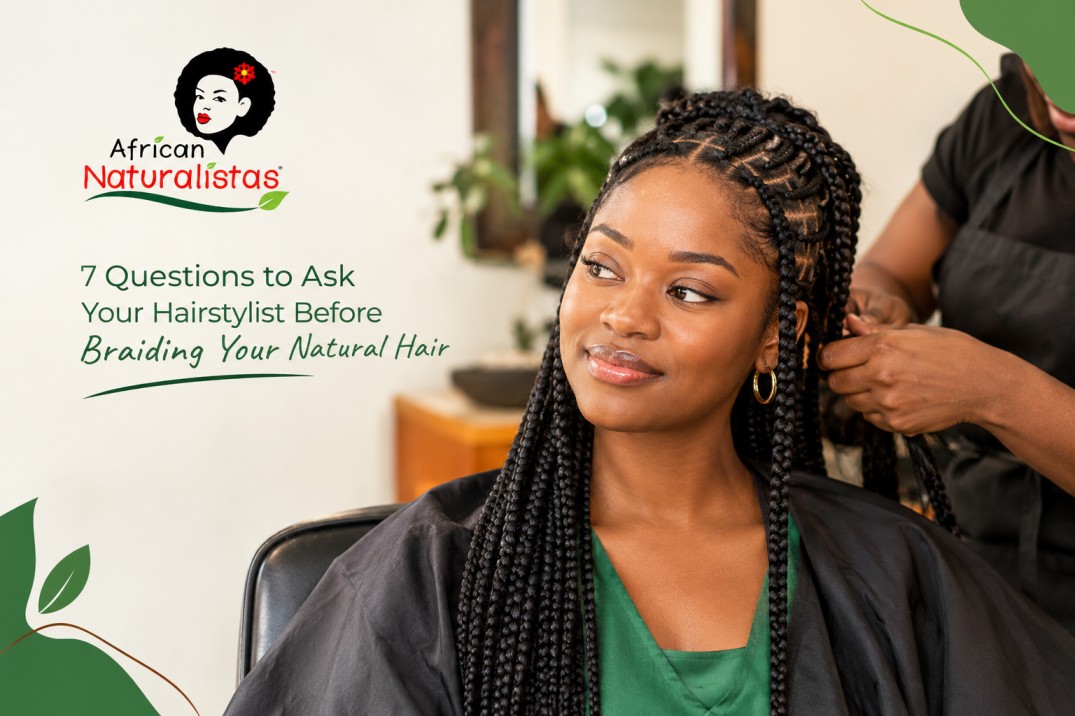
What should you ask your hairstylist before braiding your natural hair? Ask about the tension, the size and weight of the braids, how your hair will be prepared, how your edges will be handled, and how long you should keep the style in. These questions can help you choose a style that suits your hair's condition, reduces unnecessary stress on your scalp, and makes it easier to care for your natural hair while the braids are in.
Let's be honest. Sometimes, you sit down at the salon with a hairstyle saved on your phone, ready to get exactly what you came for.
You've chosen the colour, decided on the length, and probably imagined how good the finished style will look.
But how much time do you spend talking about what the style might do to your hair?
Because while beautiful braids can be convenient and give you a break from daily styling, the way they are installed, how much tension they create, and how you care for your hair underneath them all matter.
If you're trying to retain length, protect your edges, or reduce breakage, the conversation with your hairstylist should begin before the first braid is installed.
And you don't have to walk into the salon knowing everything about natural hair. You simply need to know which questions to ask.
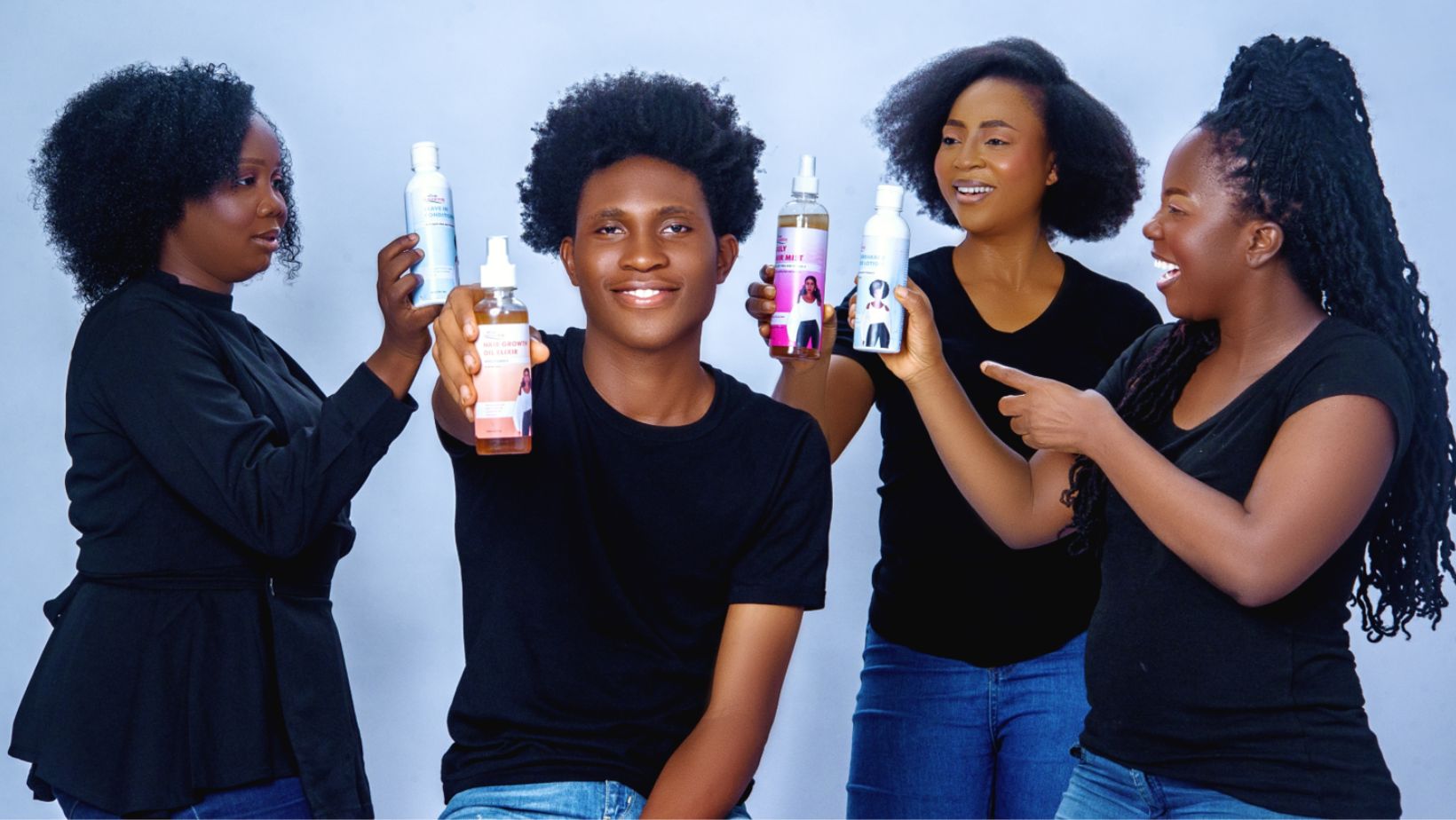
For example, having a consistent routine before and after your appointment can help you prepare your hair for styling. The African Naturalistas Starter Pack is one option for building a general hair-care routine, while Breakage Be Gone may be worth exploring if breakage is a particular concern.
You can also consider the Fertile Edges Set if you're focusing on caring for your hairline, or the Leave-In Conditioner to support conditioning and manageability.
These products do not replace a careful braiding technique, of course. A product cannot make an excessively tight hairstyle safe.
So, before you book your next appointment, let's go through seven questions worth asking your hairstylist — and why each one matters.
1. Will This Hairstyle Be Too Tight for My Hair and Scalp?
Start here. Before discussing the colour, length, or finishing touches, talk about tension.
A hairstyle can look beautiful and still put too much stress on your hair.
Braids that pull tightly at the roots can cause discomfort, contribute to breakage, and increase the risk of traction alopecia, a type of hair loss associated with repeated pulling on the hair.
This is particularly important if your edges are already fragile, your scalp is sensitive, or you have experienced thinning around your hairline.
Ask your hairstylist whether the style can be installed with less tension while still achieving the look you want.
And pay attention to how your scalp feels during the appointment.
Pain is not a requirement for a good braid installation.
If your scalp feels painfully tight, your edges are being pulled, or you develop bumps around your hairline, speak up immediately. Do not assume you have to endure the discomfort until the style settles.
A skilled stylist should be willing to adjust their technique to suit your hair and scalp.
Once you've discussed tension, there's another related question to consider: how much weight your hair will have to carry.
2. Are These Braids Too Heavy for My Natural Hair?
Have you ever installed a style that looked amazing but became uncomfortable after a few days because it felt so heavy?
That is worth thinking about before your next appointment.
The weight of a braided style depends on several things, including its length, thickness, the amount of added hair, and how the braids are distributed across your head.
Long, heavy braids can place additional strain on your roots, especially when combined with tight installation.
If your hair is fine, fragile, already breaking, or thinning around the edges, ask whether a shorter, lighter, or smaller-weight option would be more appropriate.
You do not necessarily have to abandon the hairstyle you love. Sometimes, a few adjustments can make it more comfortable and reduce unnecessary stress on your hair.
Ask your stylist:
- Can we achieve this look with less added hair?
- Would a shorter length be better for my hair?
- Will the size and weight of these braids put too much strain on my roots?
Remember, your hair's current condition matters more than simply copying a style that looks good on someone else.
Now that you've considered the tension and weight, let's talk about what happens before the braiding even begins.
3. How Should I Prepare My Hair Before Braiding?
This is a question worth asking because the work you do before your appointment can make a difference to how manageable your hair is during installation.
Ideally, your hair should be clean, appropriately conditioned, and detangled before braiding. The exact preparation will depend on your hair's condition, the style you're getting, and your stylist's process.
Ask whether you should arrive with freshly washed and stretched hair or whether your stylist prefers to handle the cleansing and preparation themselves.
If you're preparing your hair at home, avoid rushing through detangling. Work in sections, start at the ends, and loosen knots gently rather than pulling through them.
For conditioning, the African Naturalistas Deep Conditioning Mayonnaise may be an option to consider as part of your regular wash-day routine, particularly if your hair needs extra conditioning before styling.
You can also use a Leave-In Conditioner as directed to help support softness and manageability.
The important thing is not to pile on products immediately before your appointment. Follow the product directions and ask your stylist whether your hair should be completely dry or prepared in a particular way before installation.
Good preparation can help make the appointment smoother, but it cannot compensate for rough handling or excessive tension.
And that brings us to an area that deserves special attention: your edges.
4. How Will You Protect My Edges During Installation?
If you've ever watched your edges become thinner after repeatedly wearing tight braids, you know how upsetting it can be.
Your hairline can be especially vulnerable to tension because the hairs around it are often finer and more delicate.
That is why your stylist should not treat your edges as an area that needs to be pulled tightly to make the style look neat.
Ask how they plan to handle your hairline. Will they leave out fragile areas where appropriate? Can they avoid adding too much extension hair to delicate sections? Can they adjust the installation if your edges are already thinning?
Be honest about your hair history, too. If you've experienced breakage or thinning after previous styles, tell your stylist before they begin.
You may also want to build a consistent edge-care routine outside the salon. The African Naturalistas Fertile Edges Set is one option to explore, while the Hair Growth Oil Elixir can be considered as part of a broader hair-care routine.
However, no product can cancel out repeated pulling. If a style is placing too much tension on your hairline, the first step is to reduce that tension rather than relying on a product to counteract it.
Once you and your stylist have discussed how to protect your edges, ask what you should expect from the style after you leave the salon.
5. How Long Should I Keep These Braids In?
This is one of those questions people sometimes forget to ask because they're already thinking about how long they want the hairstyle to last.
But the longest-lasting style isn't necessarily the best option for your hair.
How long you should keep your braids depends on the style, the condition of your natural hair, how quickly your hair grows, how well you can maintain the style, and whether your scalp develops any problems.
Ask your stylist for a realistic maintenance and take-down timeframe rather than assuming you can keep the style indefinitely.
As the weeks pass, your natural hair grows, shed hairs remain caught in the braids, and the roots can become more difficult to manage. Leaving a style in for too long may make detangling and removal more challenging.
And if you notice persistent itching, soreness, painful bumps, or increasing tension, don't wait for your planned take-down date before addressing the problem.
Your stylist can advise you on the style's expected lifespan, but your scalp and hair condition should guide the final decision.
So, you know how to prepare for the style and when to take it down. What about caring for your hair while you're wearing it?
6. How Should I Care for My Hair and Scalp While Wearing These Braids?
Protective styling can reduce how often you manipulate your hair, but it doesn't mean you should ignore your scalp or forget about your natural hair underneath.
Before leaving the salon, ask your stylist how to maintain the style properly.
Find out how to cleanse your scalp, whether your hairstyle can tolerate your usual wash-day routine, how to dry your hair thoroughly, and what to do if your scalp becomes uncomfortable.
Your routine should suit the style you're wearing. For example, caring for knotless braids may involve different practical considerations from maintaining a wig or another protective style.
Avoid scratching your scalp aggressively or applying product after product whenever it feels itchy. If itching persists or you notice a rash, sores, painful bumps, or swelling, investigate the cause rather than assuming your scalp simply needs moisture.
For general hair maintenance, the African Naturalistas Daily Hair Mist may be useful for refreshing your hair as directed. If you have fragile hair that needs additional breakage-focused care, you can also explore Breakage Be Gone.
Neither product replaces appropriate scalp cleansing or medical treatment for an underlying scalp condition.
The aim is to keep your routine simple and consistent without disturbing the braids unnecessarily.
And there's one final question to ask before you settle into your new hairstyle — what happens when it's time to remove it?
7. How Should I Take These Braids Down Without Breaking My Hair?
Your take-down routine deserves just as much attention as the installation.
Sometimes, people spend hours having their hair braided carefully, only to remove it in a hurry and end up pulling through tangles, shed hair, and knots.
That is when avoidable breakage can happen.
Ask your stylist how they recommend removing the style, especially if it involves long extensions, small braids, or a technique you're unfamiliar with.
When taking your braids down, work patiently in sections. Avoid cutting close to your natural hair if you cannot clearly distinguish it from the extension hair. Once the extensions are removed, gently loosen shed hairs and tangles before washing.
You may find it helpful to apply a suitable product to improve manageability during detangling, but don't force a comb through stubborn knots.
After the take-down, cleanse your scalp and hair gently, condition as needed, and give yourself enough time to detangle thoroughly.
The African Naturalistas Deep Conditioning Mayonnaise can be considered as part of your post-style conditioning routine. The Starter Pack is another option if you want to return to a more complete hair-care routine after wearing braids.
If you notice significant thinning, persistent scalp irritation, or hair loss after removing the style, don't automatically assume it's normal shedding. Consider seeking advice from a qualified dermatologist or trichologist.
Now that we've covered the seven questions, let's bring everything together into a simple plan you can use before your next salon appointment.
Before You Sit in the Salon Chair, Remember This
You don't need to turn your salon appointment into an interview. These questions are simply a way to start a conversation about what your hair needs.
Before braiding, make sure you and your stylist have discussed:
- Tension: Will the style be comfortable without pulling too tightly?
- Weight: Is the length and amount of added hair suitable for your natural hair?
- Preparation: How should you cleanse, condition, and detangle before the appointment?
- Edges: How will your hairline be handled?
- Duration: How long should you keep the style in, and when should you remove it?
- Maintenance: How should you care for your hair and scalp while wearing the braids?
- Take-down: How can you remove the style while minimising unnecessary breakage?
Your stylist should be able to discuss these things with you. And if a style causes pain, excessive pulling, or persistent discomfort, you are allowed to speak up and ask for an adjustment.
Beautiful braids and healthy hair care do not have to be competing goals. The more you understand your hair's needs, the better equipped you are to make choices that support both.
Frequently Asked Questions
What should I ask my hairstylist before braiding natural hair?
Ask about tension, the weight and length of the style, how to prepare your hair, how your edges will be handled, how long to keep the braids in, how to maintain your scalp, and how to take the style down gently.
Can braids cause hair breakage?
Yes. Excessive tension, heavy extensions, rough installation, and forceful take-downs can contribute to breakage. Repeated tension can also cause traction alopecia, a form of hair loss associated with pulling on the hair.
Should my braids hurt when they are installed?
No. Braids should not cause significant pain or painful pulling. If your scalp hurts, your edges feel strained, or bumps develop around your hairline, tell your stylist and have the tension addressed.
How can I protect my edges when wearing braids?
Choose a style that does not pull tightly at the hairline, avoid excessive weight, and give your edges time to recover between styles. Targeted edge-care products may form part of your routine, but reducing tension is essential.
Should I wash my natural hair before getting braids?
In many cases, starting with clean, appropriately conditioned, detangled hair is helpful. Ask your stylist how they prefer your hair to be prepared, since the process may depend on the style and installation method.
How long should I keep braids in?
There is no single timeframe that suits everyone. It depends on the style, your hair's condition, scalp comfort, and how well you maintain it. Ask your stylist for a suitable take-down timeframe, and remove or adjust the style sooner if it causes pain or persistent irritation.
How do I reduce breakage when taking braids down?
Remove the extensions patiently in sections, avoid cutting close to your natural hair, gently loosen shed hairs and knots, and detangle without forcing a comb through your hair. Allow enough time for the process rather than rushing it.
What should I do if my scalp itches while wearing braids?
Consider possible causes such as tension, product buildup, irritation, or an existing scalp condition. Avoid aggressive scratching and applying multiple new products to the affected area. Seek professional advice if the itching persists or is accompanied by a rash, painful bumps, sores, or swelling.
Can I use hair products to prevent damage from tight braids?
Hair-care products can support conditioning and manageability, but they cannot make excessive tension safe. The most important step is to choose a suitable style and have it installed without pulling too tightly.
What is the most important thing to remember before braiding natural hair?
The style should work for your hair, not the other way around. Discuss your hair's condition with your stylist, ask questions before installation, and never ignore pain or excessive tension just to achieve a particular look.