What should you look for when buying natural hair products in Nigeria?
Start with one simple question:
What does my hair actually need?
Not what is trending on Instagram.
Not what someone with completely different hair swears by.
And definitely not the product with the biggest promises on the label.
Your natural hair may need moisture. It may need better conditioning. It may need help with manageability, breakage, your scalp, or your edges.
And sometimes, it needs more than one of these things.
That is why buying natural hair products can feel surprisingly confusing. You walk into a beauty store or browse online, and suddenly you're looking at shampoos, oils, leave-ins, hair butters, growth products, deep conditioners, and complete hair-care sets.
So how do you know what is actually worth buying?
Let's make it simpler.
First, Know What Problem You're Trying to Solve
Before you buy anything, pay attention to what your hair has been telling you.
Does it feel dry shortly after washing?
Does it break easily when you detangle?
Does it constantly feel tangled or difficult to manage?
Are your edges becoming fragile?
Does your scalp feel uncomfortable?
Or maybe your hair isn't particularly damaged, but you simply want a routine that helps you maintain healthy, manageable hair.
These are different problems.
And they shouldn't all be treated with the same product.
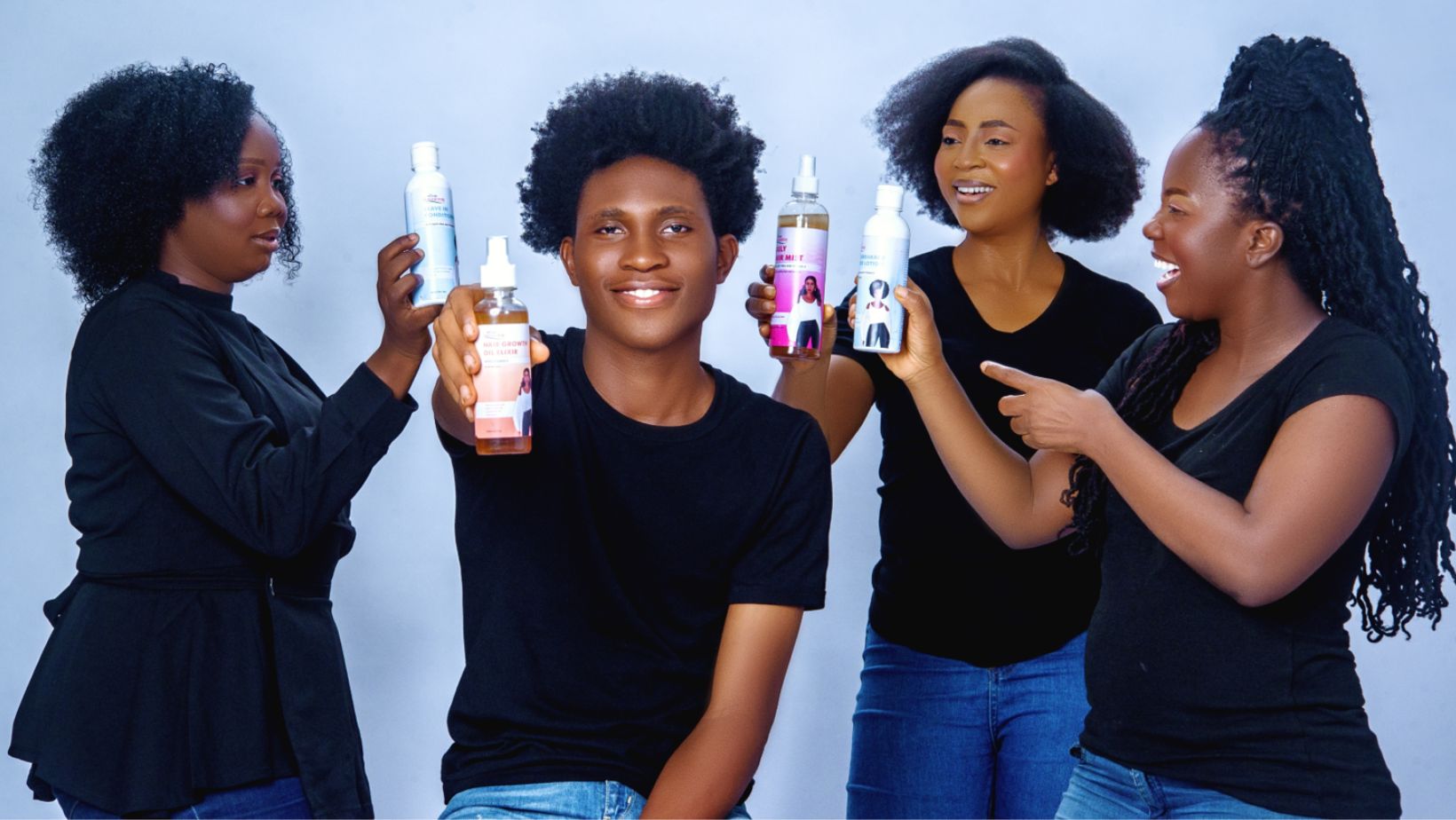
For example, if your main concern is keeping your hair moisturised and manageable, a Leave-In Conditioner or Daily Hair Mist may make more sense as part of your routine than buying another product simply because it says "growth" on the bottle.
If your hair needs more intensive conditioning, Deep Conditioning Mayonnaise may be something to consider.
And if you're specifically paying attention to your scalp and hair-growth routine, the Hair Growth Elixir can fit into that broader routine.
The point is not to buy everything.
It's to buy according to what your hair needs.
And once you know the problem you're trying to solve, the next thing to look at is the product itself.
Don't Just Look at the Product Name
This is where things get interesting.
A product can be called a "moisturiser," "growth oil," "strengthening treatment," or "natural hair solution," but the name alone doesn't tell you whether it's right for you.
Look at what the product is actually designed to do.
For example, a leave-in conditioner serves a different purpose from a shampoo.
A deep conditioner serves a different purpose from a daily moisturising mist.
An edge-care product serves a different purpose from a general hair moisturiser.
That's why you should always ask:
"What job is this product supposed to do in my routine?"
Once you can answer that, shopping becomes much easier.
You can also look at whether the product is available in different sizes or variants. Some African Naturalistas products, including the Daily Hair Mist, Hair Growth Oil Elixir, Deep Conditioning Mayonnaise and Leave-In Conditioner, are available in multiple size options.
That can be useful if you're trying a product for the first time and don't want to commit to the largest size immediately.
But there's another thing you shouldn't overlook.
Think About Your Hair's Environment
If you live in Nigeria, your hair isn't existing in a laboratory.
It's dealing with real Nigerian weather.
Heat.
Humidity.
Rain.
Sweat.
Dust.
Air conditioning.
Sun exposure.
And all of that can affect how your hair feels and behaves.
You might notice that your hair feels completely different during a particularly hot period compared with a cooler or wetter period.
That doesn't necessarily mean your hair has suddenly "changed."
It means your routine may need to respond to what's happening around you.
For example, if your hair starts feeling dry between wash days, having a lightweight product such as the Daily Hair Mist available for refreshing your hair may be more useful than simply applying heavier products repeatedly.
The same principle applies to cleansing.
You want a shampoo that works with your scalp and hair-care routine—not something that leaves your hair feeling unnecessarily stripped and difficult to manage afterward.
And once you've cleansed, conditioning becomes the next piece of the puzzle.
Look for Products That Make Your Hair Easier to Manage
This is one of the most underrated things to consider when buying natural hair products.
How easy does this product make your hair to handle?
Because your routine doesn't end when you apply the product.
You still have to detangle.
You still have to style.
You still have to wash your hair again.
You still have to live with it.
If a product helps your hair feel softer, more conditioned and easier to work with, that can make the rest of your routine less stressful.
This is particularly important if your hair tangles easily or tends to break during manipulation.
A product such as the Leave-In Conditioner can be incorporated into a routine where manageability and moisture are priorities.
And when your hair needs deeper conditioning, the Deep Conditioning Mayonnaise can become part of your wash-day routine.
See the difference?
You're not simply buying products.
You're building a routine where each product has a job.
Be Careful With "Natural" as a Selling Point
Here's something worth saying because the word natural gets thrown around a lot.
Seeing the word "natural" on a product doesn't automatically tell you whether that product will work for your hair.
And the absence of the word doesn't automatically mean a product is bad.
What matters is the overall formulation, what the product is designed to do, how you use it, and whether it fits your hair-care needs.
So don't buy something simply because the label says "natural."
Look deeper.
Read the product information.
Understand what it is meant to do.
And ask whether it actually makes sense for your routine.
That small change in how you shop can save you from buying five products that all sound impressive but don't really solve the problem you're having.
Consider Who the Product Is Actually For
Not every natural hair product is designed for every person.
This becomes especially important when you're shopping for children.
Children's hair often needs a gentler, simpler routine rather than a complicated collection of adult-focused products.
African Naturalistas has products specifically designed for younger hair, including the Early Starters Leave-In Conditioner and Early Starters Natural Hair Shampoo.
The important thing is to think about the person's actual hair-care needs rather than simply buying the same products you use for yourself.
And while we're talking about specific needs, let's talk about one area that often gets ignored until there's already a problem.
Pay Attention to Your Edges
Your edges deserve attention because they're often exposed to repeated manipulation and tension.
Tight hairstyles, frequent brushing, pulling and constant styling can put additional stress on the hair around your hairline.
So if your edges are becoming fragile, don't simply look for an "edge growth" product and continue doing everything else exactly the same way.
Look at the whole routine.
How often are you styling your hair?
How tight are your hairstyles?
How much are you brushing your edges?
How often are you manipulating them?
Products such as the Fertile Edges Set are designed around targeted edge and hair-growth care, but product choice should go hand in hand with gentler hair practices.
Because sometimes the best thing you can do for your edges is not another product.
It's less tension.
If Your Hair Is Breaking, Don't Just Buy a Growth Product
This is another common mistake.
Someone notices that their hair is breaking and immediately starts looking for something that will "grow hair."
But growth and length retention are not exactly the same thing.
Your hair can grow while you continue losing length through breakage.
So if breakage is your concern, look at products and habits that support the overall condition and manageability of your hair.
The Breakage Be Gone range can be incorporated into a routine focused on caring for breakage-prone hair.
But don't stop there.
Ask yourself why the breakage is happening.
Is your hair constantly dry?
Are you detangling aggressively?
Are your styles too tight?
Are you manipulating your hair too frequently?
Are you skipping conditioning?
The product matters.
But so does everything you do around the product.
Sometimes a Complete Routine Makes More Sense
If you're just starting your natural hair journey, buying individual products one at a time can become overwhelming.
You buy a shampoo.
Then realise you need a conditioner.
Then you need something for moisture.
Then something for breakage.
Then something for your scalp.
Before long, you've spent more money and still don't know whether you actually have a routine.
That's where a complete set can make sense.
The Starter Pack brings several core hair-care steps together, making it easier to start with a more structured routine rather than trying to figure everything out from scratch.
And if your main problem is not breakage but hair that feels extremely difficult to manage, the Stubborn No More set is another option to explore.
The idea isn't that everyone needs a complete set.
It's simply that sometimes having products that work together makes it easier to stay consistent.
And consistency is where good hair care starts to become useful.
Don't Forget to Check Reviews
Before buying a product online, take a few minutes to read what other customers are saying.
Not because every review will perfectly predict your own experience.
It won't.
Your hair is your hair.
But reviews can still help you understand things like:
- How people found the product to use
- Whether they liked the texture or scent
- Whether it worked well for their particular routine
- Whether other customers experienced similar concerns
Just remember to read reviews with some perspective.
Someone else's hair journey isn't necessarily going to be identical to yours.
Use reviews as information—not as a guarantee.
Don't Let Price Be Your Only Guide
It's tempting to think that the most expensive product must be the better product.
That's not always true.
And the cheapest product isn't automatically the best bargain either.
A better question is:
"Will this product actually serve a useful purpose in my routine?"
A ₦5,000 product you never use is more expensive than a ₦10,000 product that becomes a regular and useful part of your routine.
Think about value.
Think about how often you'll use it.
Think about the size.
Think about whether it solves a problem you actually have.
And think about whether you're buying it because you need it—or because the marketing made you feel like you need it.
So, What Should You Actually Look For?
If you're standing in front of a shelf of natural hair products and feeling overwhelmed, come back to these questions:
1. What is my main hair concern?
Dryness? Breakage? Manageability? Scalp care? Edges?
2. What job is this product supposed to do?
Know its role in your routine.
3. Does it fit my hair and scalp needs?
Not somebody else's.
4. Will it make my routine easier?
A product that makes your hair easier to care for can be incredibly valuable.
5. Can I realistically afford and consistently use it?
A good routine is one you can maintain.
6. Have I checked the product information and customer reviews?
Don't buy blindly.
And most importantly:
Don't buy products just to have products.
Build a routine.
That is a much better way to approach natural hair care.
The Bottom Line
Buying natural hair products in Nigeria doesn't have to feel like guesswork.
You don't need to chase every new product.
You don't need a shelf full of bottles.
And you don't need to buy something simply because everyone online is talking about it.
Start with your hair.
Listen to what it needs.
Choose products based on their purpose.
Pay attention to how they fit into your routine.
And give yourself enough time to actually learn what works for you.
Because good natural hair care isn't about having the most products.
It's about having the right products—and knowing how to use them.
Frequently Asked Questions
What should I look for when buying natural hair products?
Look for products that address your specific hair needs, such as moisture, conditioning, manageability, breakage, scalp care or edge care. Also consider the product's intended purpose, ingredients, size, reviews and how easily it fits into your routine.
What are the most important natural hair products to have?
A basic routine usually starts with a cleanser, conditioner and moisturising product. Depending on your hair's needs, you may also add a deep conditioner, scalp-care product, styling product or targeted treatment.
Are expensive natural hair products better?
Not necessarily. Price alone doesn't determine whether a product is right for your hair. A better way to judge value is by looking at what the product does, how much you get, how often you'll use it and whether it addresses an actual need.
How do I know which natural hair products are right for my hair?
Start by identifying your main concern. If your hair is dry, focus on moisture and conditioning. If it breaks easily, look at moisture, conditioning and gentle handling. If your scalp or edges are your main concern, look for products specifically designed around those needs.
Should I buy a complete natural hair-care set or individual products?
It depends on where you are in your hair journey. A complete set can make things easier if you're starting from scratch, while individual products may make more sense when you already have a routine and simply need to address a specific concern.
Are natural hair products suitable for children?
Children's hair can require a simpler and gentler routine. Look for products specifically designed for younger hair and consider their scalp, hair texture and individual needs rather than automatically using adult products.
How many natural hair products do I really need?
You probably don't need as many as you think. Start with the basics and add products when there is a clear reason for doing so. A simple routine that you can maintain consistently is often more useful than a complicated routine filled with products you rarely use.