What are the best natural hair products for hair breakage?
If your hair keeps breaking, the answer usually isn't to find the strongest product you can buy.
It's to figure out why your hair is breaking in the first place.
Hair that is constantly dry, tangled, over-manipulated or difficult to detangle can become much more difficult to retain over time. And if you're growing hair but losing length through breakage, it can feel like your hair simply isn't growing.
The good news is that your routine can make a big difference.
The right natural hair products for hair breakage should help you keep your strands moisturised, make your hair easier to handle, support conditioning and reduce the amount of stress your hair goes through during everyday care.
So let's start with what you should actually be looking for.
Start With Moisture
One of the first things to look at when your hair is breaking is moisture.
When hair feels dry and rough, it can become harder to detangle and manage. And every time you struggle through a knot or force a comb through your hair, you're putting additional stress on the strands.
This is where a good leave-in conditioner can become an important part of your routine.
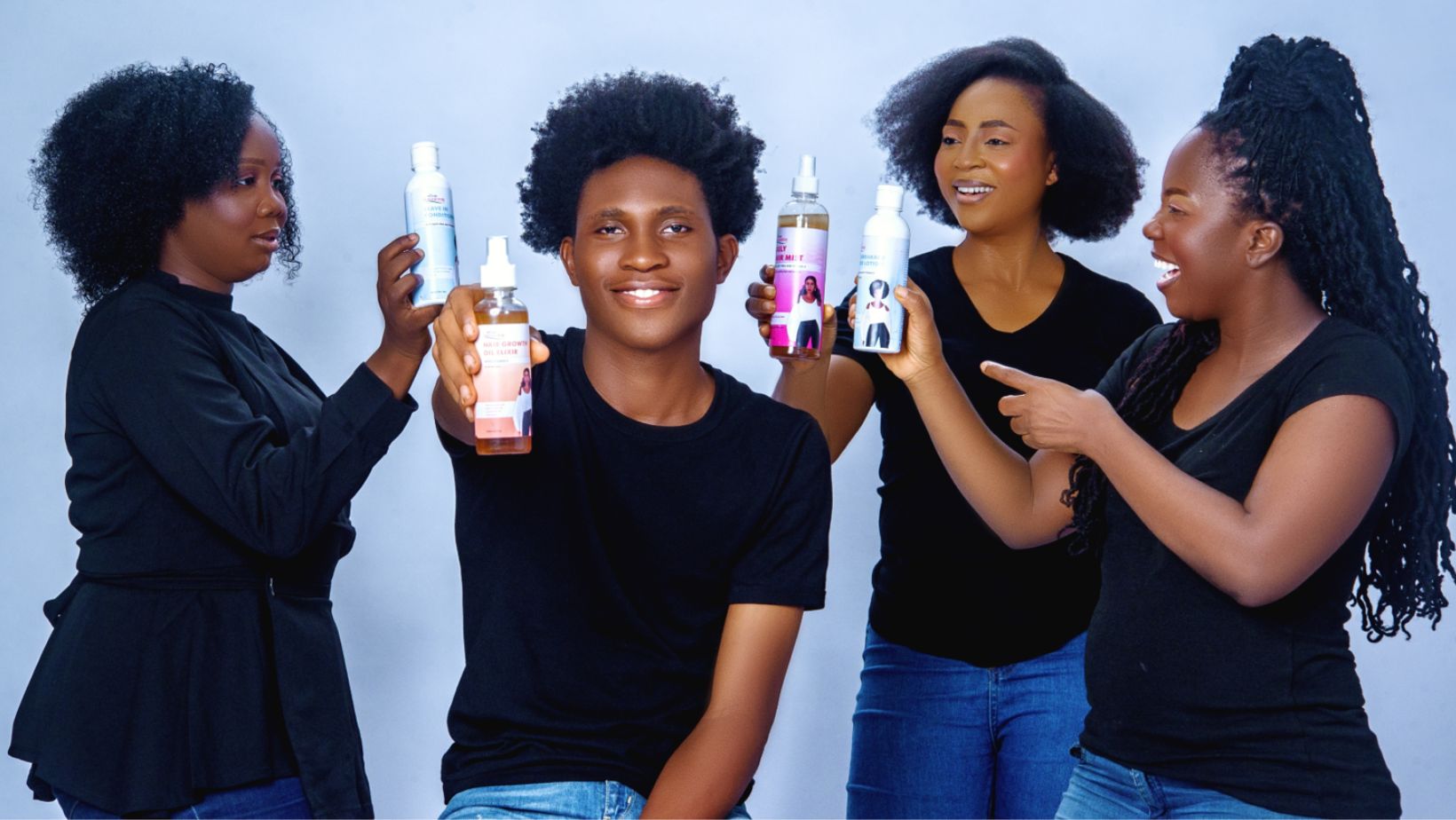
Leave-In Conditioner can be used as part of your regular hair-care routine to help keep your hair softer and easier to manage.
You can also refresh your hair between wash days with a Daily Hair Mist.
The idea isn't to keep piling products onto your hair.
It's to keep your hair in a condition where you're not constantly fighting it.
And once you've dealt with everyday moisture, there's another part of the routine that deserves just as much attention: deep conditioning.
Don't Skip Deep Conditioning
Think about what your hair goes through between wash days.
Sun. Heat. Styling. Detangling. Manipulation. Environmental exposure.
Over time, your hair can lose some of the softness and manageability that makes it easier to care for.
That's why deep conditioning can be useful when you're trying to build a better routine for fragile or breakage-prone hair.
African Naturalistas Deep Conditioning Mayonnaise is one option you can incorporate into your wash-day routine.
Deep conditioning isn't about trying to "repair" every damaged strand overnight.
It's about giving your hair consistent conditioning and making your routine easier to manage.
And that brings us to something many people overlook.
Sometimes the problem isn't simply the product you're using.
It's what happens to your hair after you use it.
The Way You Handle Your Hair Matters Too
You could have an excellent collection of natural hair products sitting on your shelf and still experience breakage if your hair is constantly being handled roughly.
Think about your detangling routine.
Are you rushing through knots?
Are you manipulating your hair every day?
Are your styles too tight?
Are you trying to force dry, tangled hair into a style?
These things matter.
A moisturised, conditioned head of hair is much easier to work with than hair that is dry and tangled.
So when you're choosing products for breakage, don't only ask:
"What product will stop my hair from breaking?"
Ask:
"What product will make my hair easier to care for?"
That's a much better question.
What About Hair Oils?
Oils can have a place in a hair-care routine, but they shouldn't be treated as a magic solution for breakage.
If your hair is already dry, simply putting oil on top of it may not solve the underlying issue.
Think about your routine as a whole.
Cleanse.
Condition.
Moisturise.
Then use oils where they make sense for your routine.
For people who also want to pay attention to their scalp and overall hair-care routine, the Hair Growth Oil Elixir can be incorporated into a broader scalp and hair-care regimen.
The important thing is consistency rather than constantly switching from one product to another.
If Your Edges Are Breaking, Pay Attention Early
Breakage isn't always happening throughout your entire head.
Sometimes, you notice it first around your edges.
If your hairline is becoming thinner or your edges are repeatedly exposed to tension from tight hairstyles, that's something worth paying attention to.
A targeted routine may make more sense than simply applying your regular products everywhere.
The Fertile Edges Set is designed specifically around edge and hair-growth care.
And if breakage is one of your main concerns throughout your hair, the Breakage Be Gone range gives you another option to consider.
But here's something important:
A product cannot compensate for a routine that keeps damaging your hair.
If your hairstyle is consistently too tight, for example, adding another product doesn't remove the tension.
Your routine has to address the cause as well as the care.
What Should You Avoid When Your Hair Is Breaking?
Now that we've talked about what to use, let's talk about what to stop doing.
Avoid excessive manipulation
Your hair doesn't need to be restyled every single day.
The more you manipulate fragile strands, the more opportunities there are for unnecessary breakage.
Avoid aggressive detangling
Don't wait until your hair is completely tangled and then attack it with a comb.
Work in sections and give your hair enough slip and moisture to make detangling easier.
Avoid constantly changing products
If you change your entire routine every few weeks, you may never know what is actually working.
Give your routine time.
Avoid overly tight hairstyles
If a style hurts, pulls at your edges or leaves your scalp feeling uncomfortable, that's a warning sign, not something you simply need to "get used to."
Avoid focusing only on growth
This one is important.
If your hair is growing but breaking at roughly the same rate, you may feel like you're making no progress.
Sometimes your biggest hair goal shouldn't be growing faster.
It should be retaining more of the growth you already have.
Build a Simple Routine Instead of Buying Everything
You don't need ten different products to start taking better care of your hair.
A simple routine can be much easier to maintain.
You might start with:
1. Cleanse
Use a shampoo that fits your hair and scalp needs.
2. Condition
Follow cleansing with conditioning to help improve softness and manageability.
3. Deep condition
Add regular deep conditioning when your hair needs additional conditioning and moisture.
4. Moisturise
Use a leave-in or moisturising product to help keep your hair manageable between wash days.
5. Refresh
Use something like a Daily Hair Mist when your hair needs a moisture refresh.
6. Protect
Reduce unnecessary manipulation and protect your hair when sleeping or wearing styles.
If you're not sure where to start, a complete routine can be easier than trying to build everything from scratch. The Starter Pack brings several core hair-care steps together in one routine.
And if the main issue isn't breakage but difficult, stubborn-to-manage hair, you may need to approach the problem differently. The Stubborn No More set is another option for people looking to improve manageability.
For younger hair, the same principle applies: keep things simple and gentle. The Early Starters Leave-In Conditioner and Early Starters Natural Shampoo are designed for a children's hair-care routine.
The Biggest Lesson About Hair Breakage
If there's one thing I want you to take away from this, it's this:
Don't treat hair breakage as a single-product problem.
Your hair needs a routine.
It needs moisture.
It needs conditioning.
It needs gentle handling.
It needs protection from unnecessary tension and manipulation.
And it needs consistency.
The best natural hair products for hair breakage are therefore not necessarily the products with the biggest promises.
They're the products that fit into a routine you can actually maintain—and help you take better care of your hair over time.
Because healthy hair care isn't about doing more.
Sometimes, it's about doing the right things consistently.
Frequently Asked Questions
What are the best natural hair products for hair breakage?
Look for products that support moisture, conditioning, manageability and gentle hair care. A simple routine can include a shampoo, conditioner, leave-in conditioner, deep conditioner and targeted products based on your specific concerns.
Can natural hair products stop hair breakage?
Hair products can support healthier hair care by improving moisture, conditioning and manageability, but breakage can have many causes. Your handling habits, styling practices, tension and overall routine also matter.
How often should I deep condition hair that breaks easily?
There isn't one schedule that works for everyone. Consider your hair's condition, how often you wash and how your hair responds to conditioning. The goal is to maintain a routine that keeps your hair manageable without unnecessarily overloading it with products.
Does dry hair cause breakage?
Dryness can make hair feel rougher and more difficult to manage, which can make detangling and styling more stressful on the strands. Maintaining appropriate moisture and conditioning can make hair easier to handle.
Should I use hair oil if my hair is breaking?
Hair oils can be part of a hair-care routine, but they shouldn't be viewed as a standalone solution for breakage. Consider how oil fits into your overall cleansing, conditioning and moisturising routine.
Can tight hairstyles cause hair breakage?
Repeated tension from tight hairstyles can contribute to hair and edge problems. If a hairstyle consistently pulls, hurts or puts noticeable tension on your hairline, it's worth changing the style or reducing the tension.
How can I retain length if my hair keeps breaking?
Focus on reducing unnecessary manipulation, improving moisture and conditioning, detangling gently, protecting your hair and maintaining a consistent routine. The goal is to keep more of the hair you're already growing.
When should I see a trichologist about hair breakage?
If you're experiencing persistent or significant hair loss, thinning, bald patches, scalp problems or breakage that doesn't improve with changes to your routine, professional assessment can help identify what may be contributing to the problem.