What products does natural hair really need, shampoo, conditioner, leave-in conditioner, hair butter, or all of them?
The short answer is that each product has a different job. Shampoo cleanses your hair and scalp, conditioner softens and detangles, leave-in conditioner provides ongoing moisture and manageability, while hair butter helps nourish the hair and reduce moisture loss.
But here’s where things get confusing: your natural hair may not need every product in the same way, at the same time, or in the same amount.
Your hair’s needs can change depending on its texture, porosity, length, current condition, styling habits, scalp health, and even the weather.
So instead of buying products simply because everyone seems to be using them, let’s look at what each product actually does, when you need it, and how the products can work together.
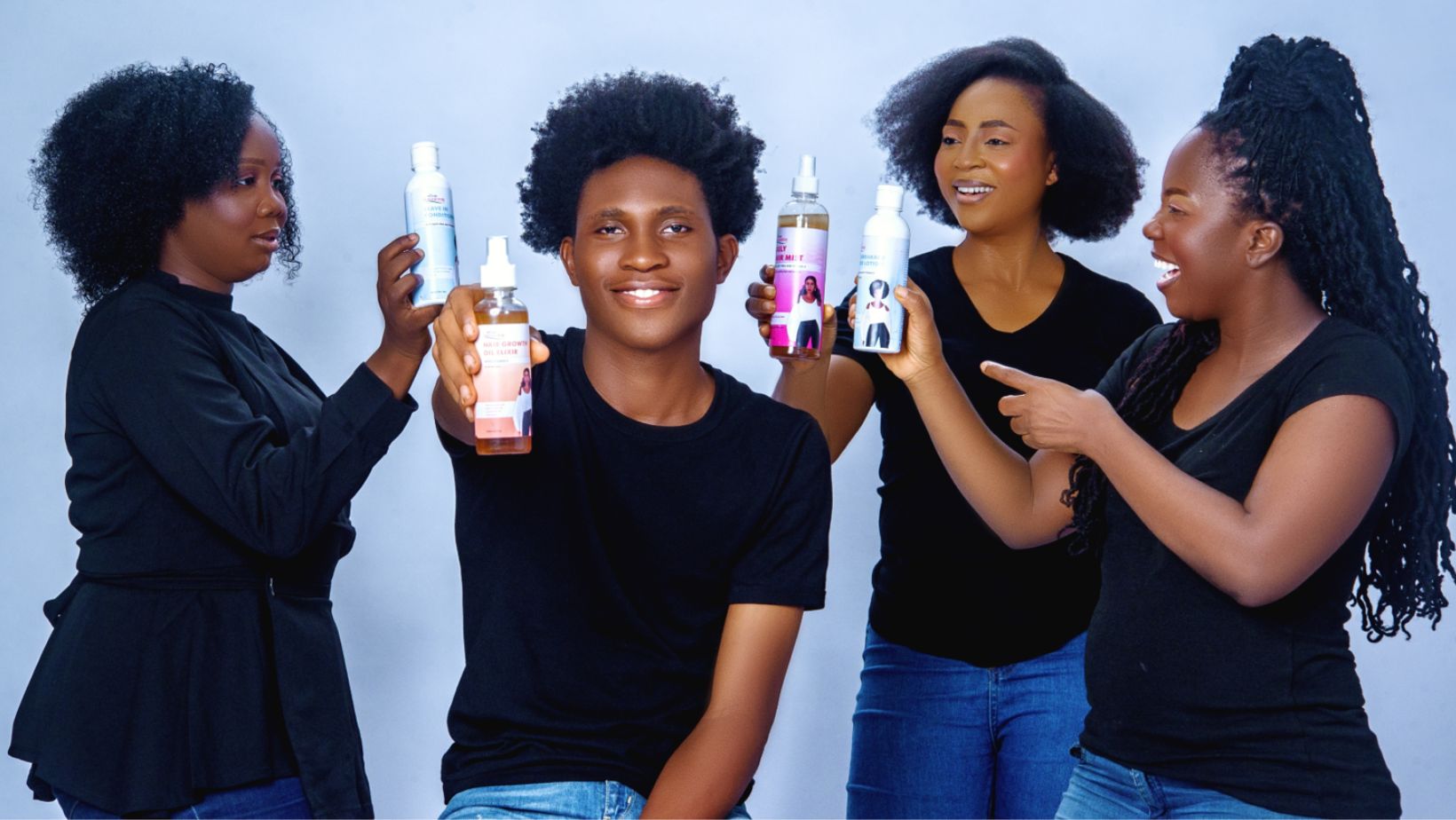
If you are just beginning to build your natural hair routine, products such as the Leave-In Conditioner, Daily Hair Mist, and Deep Conditioning Mayonnaise can help you understand the difference between everyday moisture, conditioning, and deeper hair care.
Now, let’s start with the product most people reach for first.
1. Shampoo: Your Hair Needs to Be Clean Before It Can Be Properly Cared For
Think about your scalp for a moment.
It produces natural oils, and throughout the week, sweat, dust, styling products, oils, and environmental buildup can collect around the scalp and hair strands.
That buildup does not automatically mean your hair is dirty or unhealthy. It simply means your hair and scalp need to be cleansed regularly.
That is where shampoo comes in.
What does shampoo do?
Shampoo is primarily used to cleanse the scalp and hair. It helps remove:
- Sweat and dirt
- Excess oil
- Product buildup
- Environmental impurities
- Flakes and debris that may collect around the scalp
A good shampoo should clean your hair without leaving it feeling excessively dry, rough, or stripped.
This is especially important for natural hair because tightly coiled strands can already struggle to distribute natural scalp oils along the length of the hair.
Does natural hair need shampoo?
Yes, natural hair needs cleansing. However, the frequency depends on your scalp, lifestyle, hairstyle, and product use.
If you sweat frequently, exercise regularly, use many styling products, or have a scalp that becomes oily quickly, you may need to cleanse more often.
If your hair is in a protective style, you may follow a different cleansing schedule, but that does not mean your scalp should be neglected.
For children, cleansing should be gentle and appropriate for their delicate hair and scalp. The Early Starters Natural Shampoo is designed for children from babyhood through adolescence and helps cleanse the hair while leaving it moisturised.
What shampoo cannot do
Shampoo is not designed to replace conditioner, leave-in conditioner, or hair butter.
Its main job is to clean.
Once your hair and scalp are clean, the next question becomes: how do we make the hair soft, manageable, and easier to handle?
That brings us to conditioner.
2. Conditioner: Because Clean Hair Is Not Always Easy-to-Manage Hair
Have you ever washed your hair and noticed that it feels clean but difficult to comb?
Your hair may feel rough, tangled, or resistant to your fingers. That is often where conditioner becomes essential.
Shampoo cleanses, but conditioner helps improve how your hair feels and behaves after cleansing.
What does conditioner do?
Conditioner helps:
- Soften the hair
- Improve slip
- Reduce tangling
- Make detangling easier
- Improve manageability
- Reduce friction during handling
- Leave the hair feeling smoother
Natural hair often benefits from products that provide slip because tightly coiled strands can wrap around one another and become tangled easily.
The easier your hair is to detangle, the less likely you are to force a comb through knots or pull unnecessarily at the strands.
And that matters because repeated rough handling can contribute to breakage.
Rinse-out conditioner versus leave-in conditioner
A rinse-out conditioner is generally applied after shampooing and then rinsed away.
A leave-in conditioner, on the other hand, is designed to remain in the hair.
They are not necessarily interchangeable.
A rinse-out conditioner helps prepare your hair for detangling and styling during wash day. A leave-in conditioner provides additional moisture and manageability after the hair has been rinsed.
For children, the Early Starters Leave-In Conditioner helps soften and moisturise delicate hair, making it easier to detangle and style.
So, once your hair has been cleansed and conditioned, you may still need something to help maintain that softness between wash days.
That is where leave-in conditioner becomes useful.
3. Leave-In Conditioner: The Moisture Your Hair Can Keep After Wash Day
Let’s say you have finished washing your hair.
Your hair is clean. You have conditioned it. It feels softer, but you know it will not stay that way forever.
Your hair will be exposed to friction from clothing, sleeping, styling, weather, and everyday movement.
This is why many natural hair routines include a leave-in conditioner.
What does leave-in conditioner do?
A leave-in conditioner is designed to remain in the hair after washing. It can help:
- Maintain softness
- Add moisture
- Improve manageability
- Make styling easier
- Support easier detangling
- Reduce the rough feeling that can occur between wash days
- Prepare the hair for other styling or moisturising products
The Leave-In Conditioner can be used as part of a routine focused on keeping natural hair soft, moisturised, and manageable.
Does every head of natural hair need leave-in conditioner?
Many people with natural hair find leave-in conditioner helpful, but the amount and frequency should depend on how their hair responds.
Some hair needs a generous amount because it becomes dry quickly. Other hair may become weighed down if too much product is applied.
The goal is not to make your hair feel coated.
The goal is to help it feel moisturised, flexible, and easy to manage.
Leave-in conditioner is not the same as water
This is an important distinction.
Water can temporarily hydrate the hair, but a leave-in conditioner is formulated to do more than simply wet the strands. It can provide conditioning agents and ingredients that improve softness and manageability.
However, leave-in conditioner is not always enough on its own, especially if your hair loses moisture quickly.
If your curls feel dry again a day or two after applying your leave-in conditioner, you may need a way to refresh them without completely restarting your wash day.
That is where a daily hair mist can help.
4. Daily Hair Mist: For Refreshing Hair Between Wash Days
Natural hair does not always need to be washed every time it feels a little dry.
Sometimes, it simply needs a light refresh.
Your hair may feel fine on wash day but become dull, dry, or less flexible a few days later. This can happen because of weather, friction, styling, or normal moisture loss.
A daily hair mist can be useful during this stage of your routine.
What does a daily hair mist do?
A daily hair mist can help:
- Refresh dry hair
- Add lightweight moisture
- Improve softness
- Make curls feel more manageable
- Revive hair between wash days
- Reduce the need to completely restyle or rewash the hair
The Daily Hair Mist is designed to provide lightweight moisture and refresh the hair without making it feel unnecessarily heavy.
When should you use it?
You may use a hair mist:
- Before gently restyling your hair
- When your curls feel dry
- Before applying a small amount of leave-in conditioner
- During the week between wash days
- Before gently separating or arranging a hairstyle
A mist can be particularly useful when your hair needs a little moisture but does not need a full wash.
Still, there are times when light moisture is not enough. If your hair feels consistently dry, rough, weak, or damaged, you may need a more intensive conditioning step.
That takes us to deep conditioning.
5. Deep Conditioning Mayonnaise: When Your Hair Needs More Than Everyday Moisture
There is a difference between keeping your hair moisturised and giving it a more intensive conditioning treatment.
Everyday moisture helps your hair remain manageable. Deep conditioning is often used when the hair needs extra softness, conditioning, strength, elasticity, or support after experiencing dryness and damage.
What does deep conditioner do?
A deep conditioner can help:
- Improve softness
- Provide intensive conditioning
- Support elasticity
- Improve manageability
- Help dry or damaged hair feel more flexible
- Support the balance between moisture and strength, depending on the formulation
The Deep Conditioning Mayonnaise helps deep condition dry or damaged hair while supporting softness, strength, and elasticity.
When might your hair benefit from deep conditioning?
You may want to include deep conditioning when:
- Your hair feels unusually dry
- Your strands feel rough or stiff
- Detangling has become more difficult
- Your hair has been exposed to heat or harsh environmental conditions
- You frequently manipulate or style your hair
- Your hair feels less elastic than usual
- Your regular conditioner does not seem to be enough
Deep conditioning does not mean you need to leave the product on indefinitely or use it every day.
The right frequency depends on your hair’s condition and how it responds.
Once your hair has received enough conditioning, you may still want a product that helps nourish the strands and reduce moisture loss.
That is where hair butter enters the conversation.
6. Hair Butter: Helping Your Hair Hold On to Moisture
Now, let’s clear up a common misunderstanding.
Hair butter is not the same thing as water, and it is not a replacement for shampoo or conditioner.
Hair butter is generally used to nourish the hair, improve softness, provide lubrication, and help reduce moisture loss.
It is often especially useful for people whose hair becomes dry quickly or who need extra support when styling and maintaining their strands.
What does hair butter do?
Depending on its formulation, hair butter may help:
- Nourish the hair
- Improve softness
- Reduce friction
- Support moisture retention
- Make hair easier to style
- Provide lubrication during handling
- Help reduce the dry feeling that can contribute to rough manipulation
However, hair butter works best when used as part of a moisture-focused routine.
Applying a heavy butter to extremely dry hair without first providing moisture may not give you the result you expect.
In simple terms:
Moisture helps hydrate the hair. Hair butter can help support the hair and reduce how quickly that moisture is lost.
This is why the order and combination of products matter.
7. So, Should You Use Leave-In Conditioner, Hair Butter, or Both?
You can use both, but you do not necessarily need to apply large amounts of both every time.
A simple routine may look like this:
- Lightly mist the hair if it is dry.
- Apply leave-in conditioner to improve moisture and manageability.
- Apply a small amount of hair butter if your hair needs additional nourishment or moisture retention.
- Style gently.
The important thing is to observe your hair.
If your hair feels soft, flexible, and manageable, you may not need to keep adding more product.
If it feels heavy, greasy, coated, or difficult to style, you may be using too much.
Natural hair care is not about applying the maximum number of products. It is about using the right products in the right amounts for your hair’s actual needs.
8. What About Hair Growth Oil Elixir?
At this point, you may be wondering where hair oil fits into the routine.
Hair oil and hair butter are often grouped together, but they do not always serve exactly the same purpose.
Hair oils may be used to nourish the scalp, lubricate the strands, reduce friction, or help seal in moisture. Their benefits depend on the ingredients and the way the product is used.
The Hair Growth Elixir is a nutrient-rich oil blend designed to nourish the scalp and strands while supporting healthier-looking growth and reducing breakage.
What hair oil cannot do
Hair oil should not be treated as a magic solution for every hair concern.
It cannot replace:
- Cleansing
- Conditioning
- Gentle detangling
- A balanced hair care routine
- Proper management of tension and manipulation
- Professional assessment when there is persistent hair loss or scalp problems
If your main concern is dryness, start by looking at your moisture routine.
If your concern is breakage, look at moisture, conditioning, detangling, styling tension, and handling.
If your concern is scalp health or thinning, you may need a more targeted approach.
That brings us to products designed for specific hair concerns rather than everyday maintenance.
9. When Your Hair Needs More Targeted Care
Not every hair problem can be solved by simply adding another moisturiser.
For example, if your edges are thinning, your hair is breaking frequently, or your hair feels difficult to manage, a targeted product or complete routine may be more helpful than randomly combining products.
For fragile or thinning edges
The Fertile Edges Set is designed as a targeted edge-care routine for weak or thinning hairlines.
It may be useful for someone who needs more focused care around the edges rather than applying general hair products everywhere and hoping for the best.
For hair breakage and length retention
If your hair seems to grow but never appears to retain length, breakage may be part of the problem.
The Breakage Be Gone is designed to support a routine focused on reducing breakage and helping the hair retain more of its length.
Of course, reducing breakage also requires gentle handling, suitable hairstyles, proper detangling, and avoiding excessive tension.
For a complete routine
If you are tired of trying to figure out which product should come first, a complete routine may make things easier.
The Starter Pack brings together key steps for cleansing, conditioning, moisturising, detangling, and maintaining natural hair.
This can be useful if you are starting your natural hair journey or want to simplify your existing routine.
For hair that is difficult to manage
Sometimes, the issue is not that your hair needs more products. It may need better conditioning, more moisture, gentler detangling, or a more consistent routine.
The Stubborn No More is designed to help make natural hair more manageable through a combination of conditioning and moisturising care.
And once you understand what each product does, choosing what your hair needs becomes much easier.
10. A Simple Natural Hair Routine: What Should You Actually Use?
You do not have to use every product every day.
A practical routine may look like this:
On wash day
- Shampoo to cleanse the scalp and hair.
- Condition to soften and improve slip.
- Deep condition when your hair needs extra softness, moisture, strength, or elasticity.
- Apply leave-in conditioner to support ongoing moisture and manageability.
- Use hair butter or oil if your hair needs additional nourishment or moisture retention.
- Style gently, avoiding unnecessary pulling and tension.
Between wash days
- Check whether your hair actually feels dry.
- Use a light Daily Hair Mist if your hair needs refreshing.
- Apply a little leave-in conditioner if additional softness or moisture is needed.
- Use a small amount of hair butter or oil when appropriate.
- Avoid repeatedly manipulating the hair just because you want to change the style.
For children
Children’s hair needs gentle, age-appropriate care.
A routine may include the Early Starters Natural Shampoo for cleansing and the Early Starters Leave-In Conditioner for softness, moisture, and easier detangling.
The goal is to keep the hair clean, moisturised, manageable, and protected without making wash day unnecessarily stressful.
11. How Do You Know What Your Hair Needs?
Instead of asking, “What product is everyone using?” ask your hair a few more useful questions.
Does your scalp feel dirty or have buildup?
You may need shampoo.
Does your hair feel rough or difficult to detangle after washing?
You may need conditioner with better slip.
Does your hair become dry between wash days?
You may benefit from leave-in conditioner or a lightweight hair mist.
Does your hair feel extremely dry, weak, or damaged?
You may need a deep-conditioning treatment and a closer look at your routine.
Does your hair lose moisture quickly?
You may benefit from a combination of moisture, leave-in conditioner, and a suitable butter or oil.
Are your edges thinning or becoming fragile?
You may need targeted edge care and a review of hairstyles that place tension on the hairline.
Is your hair breaking frequently?
Look beyond products. Check your detangling technique, styling tension, moisture routine, heat use, and how often you manipulate your hair.
The best routine is not necessarily the longest one.
It is the one that responds to what your hair is actually experiencing.
Your Natural Hair Does Not Need Everything, It Needs What Makes Sense
Shampoo, conditioner, leave-in conditioner, hair butter, hair mist, deep conditioner, and hair oil all have different roles.
Shampoo cleanses.
Conditioner softens and improves slip.
Leave-in conditioner supports ongoing moisture and manageability.
Hair mist refreshes the hair between wash days.
Deep conditioner provides more intensive conditioning when your hair needs it.
Hair butter can nourish the strands and support moisture retention.
Hair oil may support scalp and strand care, depending on the formulation and how it is used.
The key is to stop thinking about natural hair care as a competition to see how many products you can apply.
Instead, pay attention to how your hair feels, how easily it detangles, how well it retains moisture, and whether your routine is helping you reduce breakage and unnecessary manipulation.
Your hair does not need the most products. It needs the right care, applied consistently and gently.
Frequently Asked Questions
Is shampoo or conditioner more important for natural hair?
Both are important, but they do different jobs. Shampoo cleanses the scalp and hair, while conditioner softens the hair, improves slip, and makes detangling easier. A healthy routine usually needs both.
Can I use leave-in conditioner without using rinse-out conditioner?
You can, depending on your hair’s needs and the product instructions. However, rinse-out conditioner can provide additional slip and conditioning during wash day, while leave-in conditioner remains in the hair to support moisture and manageability afterward.
Is hair butter the same as leave-in conditioner?
No. Leave-in conditioner is generally formulated to provide moisture, softness, and manageability without being rinsed out. Hair butter is often richer and may help nourish the strands, reduce friction, and support moisture retention.
Should I apply hair butter before or after leave-in conditioner?
In many routines, leave-in conditioner is applied first, followed by a small amount of hair butter or oil if needed. However, the best order depends on the products and how your hair responds.
Can hair oil moisturise natural hair?
Hair oil does not provide moisture in the same way water-based products do. It may help lubricate the hair and support moisture retention, but it should not replace a proper moisture and conditioning routine.
How often should I deep condition natural hair?
There is no single schedule that works for everyone. Some people deep condition weekly, while others may need it less often. Consider your hair’s dryness, damage, styling habits, and how it responds to your regular conditioner.
Does natural hair need daily moisturising?
Not necessarily. Some hair needs frequent refreshing, while other hair can remain moisturised for several days. Moisturise when your hair needs it rather than applying more product automatically.
Why does my natural hair still feel dry after applying products?
Possible reasons include using too little moisture, applying products to very dry hair, using too much product buildup, washing too frequently, harsh handling, environmental exposure, or using products that do not suit your hair. Your routine may need adjustment rather than simply more products.
What is the best natural hair product for breakage?
There is no single product that solves every case of breakage. A breakage-focused routine should include moisture, conditioning, gentle detangling, low-tension styling, and reduced manipulation. Products such as Breakage Be Gone can support that type of routine.
What products should I use on my child’s natural hair?
Children generally need gentle cleansing, conditioning, moisture, and careful detangling. The Early Starters Natural Shampoo and Early Starters Leave-In Conditioner can be included in a gentle routine for children’s hair.