
How do I know if my hair care routine is actually working?
Your hair will usually tell you.
If your hair is constantly difficult to detangle, your scalp feels uncomfortable, your curls don't respond to products the way they used to, or your hair feels weighed down after wash day, your routine may need some adjusting.
The tricky part is that we often don't notice these signs until they've been happening for a while.
We get used to the way our hair feels.
We assume it's normal.
We buy another product.
Then another.
Before long, we have a shelf full of products, but we're still wondering why our hair doesn't seem to cooperate.
Here's the thing: you don't necessarily need more products.
You may simply need to start paying closer attention to what your hair is telling you.
Your hair is constantly giving you feedback. The way it feels after washing. How easily it detangles. How long your style lasts. How your scalp behaves between wash days.
Once you start paying attention to those signs, it becomes much easier to figure out what your routine is missing.
So let's look at seven signs that your current hair care routine might need a rethink.
YOUR HAIR FEELS ROUGH RIGHT AFTER WASH DAY
Wash day is supposed to leave your hair feeling clean and refreshed.
But clean doesn't have to mean stripped.
If your hair consistently feels rough, stiff, or unusually difficult to manage immediately after washing, that's something worth paying attention to.
Before you start searching for another product, take a closer look at your entire cleansing routine.
Are you washing too frequently?
Are you using a cleanser that's too harsh for your hair?
Are you following up with enough conditioning?
Are you rushing through the conditioning step because you just want to finish wash day?
Sometimes, the problem isn't that your hair needs more products. Your routine may simply need better balance.
The goal of cleansing is to remove dirt, sweat, oil, and buildup without leaving your hair feeling like all of its softness has disappeared along with them.
Pay attention to how your hair feels after each step.
That feedback matters.
And if your hair consistently feels like it needs extra softness and moisture after cleansing, you may want to give your conditioning routine more attention. A deep conditioning treatment can be an important part of a routine when your hair needs more than your regular conditioner can provide.
The Deep Conditioning Mayonnaise can be incorporated into your routine as part of your deeper conditioning days.
The point isn't to use a product simply because someone recommended it.
It's to understand what your hair needs and choose products that support that need.
DETANGLING FEELS LIKE A BATTLE EVERY SINGLE TIME
If every wash day ends with you staring at your comb like it personally offended you, your routine may need some attention.
Detangling shouldn't be a race.
And it definitely shouldn't feel like you're fighting your own hair.
The products you're using matter, but so does the process.
Hair that's properly conditioned is generally easier to manage. Using a product with good slip can help make detangling more comfortable, while working in sections and starting from the ends can make the process much less overwhelming.
The other thing to pay attention to is breakage.
If you notice lots of short broken strands during detangling, or your hair seems to be getting shorter despite growing at the roots, it's worth looking at how you're handling your hair.
Be gentle.
Don't rush through knots.
Don't force a comb through a section that's clearly resisting you.
And don't assume that breakage is simply something you have to live with because you have natural hair.
If breakage is one of the concerns you're trying to address, you can explore Breakage Be Gone as part of a more intentional hair care routine.
The goal isn't to make your hair behave like someone else's.
It's to make your own hair easier for you to care for.
If detangling is consistently difficult, don't just accept it as "what natural hair is like."
Ask yourself what you could change to make the process easier.
Your routine should work with your hair, not against it.
YOUR HAIR LOOKS GREAT ON WASH DAY... THEN GIVES UP TWO DAYS LATER
You know the feeling.
Your hair looks amazing on Sunday.
Soft.
Defined.
Fresh.
Then Wednesday arrives.
And suddenly you're wondering where all that softness went.
If your hair consistently looks and feels great immediately after wash day but becomes difficult to manage a few days later, your routine may not be supporting your hair throughout the entire week.
This is where your midweek routine matters.
How are you refreshing your hair?
Are you adding moisture when your hair needs it?
Are you using products that help maintain softness without leaving behind heavy buildup?
Sometimes, the missing piece isn't your wash day routine at all.
It's what happens between wash days.
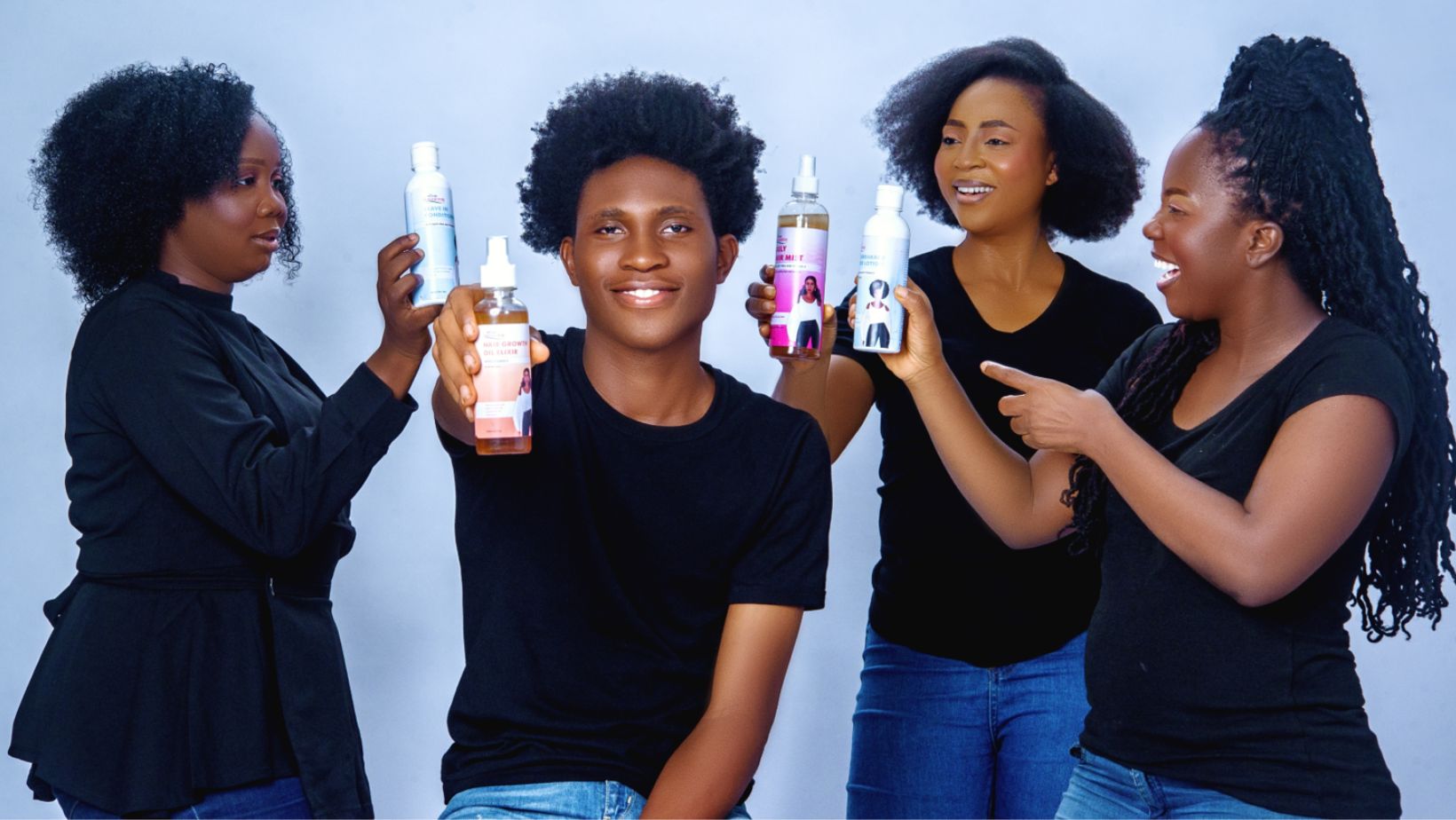
A lightweight product like the Daily Hair Mist can help you refresh your hair when it starts feeling like it needs a little extra attention.
And depending on your hair's needs, a leave-in conditioner can also be useful for maintaining softness and manageability between wash days. You can explore the Leave-In Conditioner as part of your regular hair care routine.
Think of your wash day as the foundation.
Your midweek routine is how you maintain it.
YOUR SCALP KEEPS TRYING TO GET YOUR ATTENTION
Your scalp is part of your hair care routine too.
It's easy to focus entirely on the hair you can see and forget about the skin underneath it.
But if your scalp constantly feels uncomfortable, excessively oily, congested, or like it needs attention, don't ignore those signals.
Start by looking at your routine.
Are you cleansing your scalp properly?
Are you using too many heavy products?
Are you applying products directly to your scalp when they were designed for your strands?
Are you washing too often, or not often enough for your particular lifestyle?
Scalp care isn't about piling more products onto your head.
It's about understanding what your scalp needs and keeping your routine intentional.
If you're looking for a product to incorporate into your scalp and hair care routine, you can explore the Hair Growth Elixir.
But remember: if you experience persistent itching, severe flaking, sores, or other concerning symptoms, it's best to speak with a qualified healthcare professional or dermatologist rather than trying to treat the issue yourself with hair products.
Your scalp is part of the bigger picture.
Healthy-looking hair doesn't exist separately from the environment it's growing from.
YOU KEEP ADDING PRODUCTS, BUT YOUR HAIR KEEPS GETTING HARDER TO MANAGE
Let's talk about something we don't always want to admit.
Sometimes, more is not better.
You buy a new product because someone online said it changed their hair.
Then you add another because your favourite influencer recommends it.
Then another because your hair isn't responding the way you expected.
Suddenly, your routine has become a 12-step process.
And your hair still isn't happy.
At some point, you have to stop and ask:
Do I actually need another product, or do I need a simpler routine?
Product buildup can affect how your hair feels and behaves. Using too many products without understanding how they work together can make your routine more complicated than it needs to be.
A good hair care routine isn't necessarily the one with the most products.
It's the one where every product has a purpose.
Cleanse.
Condition.
Moisturise.
Protect.
Refresh when necessary.
Pay attention to how your hair responds.
You don't need a shelf full of products to prove that you care about your hair.
You need a routine that makes sense for you.
And if you're constantly struggling with buildup, heaviness, or products that seem to stop working after a while, that may be your hair's way of telling you that it's time to simplify.
YOU'RE CONSTANTLY CHANGING YOUR ROUTINE
This one is especially common when you're trying to figure out what works for your hair.
One week, you're following one routine.
The next week, you've completely changed it because you saw something new online.
Then two weeks later, you're trying something else.
The problem?
You never really get the chance to understand what's actually working.
Your hair care routine doesn't have to stay exactly the same forever. In fact, it shouldn't. Your hair, lifestyle, environment, and preferences can all change.
But constantly changing everything at once makes it difficult to know what your hair actually likes.
Instead, try making small, intentional changes.
Pay attention.
Give your routine time.
If you introduce something new, observe what happens.
Did your hair become easier to manage?
Did it feel better after washing?
Did your scalp respond well?
Did your routine become easier to maintain?
The more attention you pay, the better you'll become at understanding your own hair.
And that's a skill no trending product can replace.
You don't need to become an expert overnight.
You simply need to become more familiar with your own hair.
YOU KNOW YOUR ROUTINE ISN'T WORKING, BUT YOU'RE AFRAID TO START OVER
Sometimes, you already know.
You know your routine isn't working.
You know you don't enjoy wash days.
You know your hair feels difficult to manage.
You know you're using products because someone else recommended them, not because you know why they're part of your routine.
But starting over can feel overwhelming.
Especially when you've spent money on products.
Here's the good news.
You don't have to throw everything away and start from zero tomorrow.
Start by paying attention.
Look at what you currently use.
Ask yourself what each product actually does.
Keep the things that work.
Question the things that don't.
Simplify where you can.
Then build from there.
Your hair care routine doesn't need to be perfect.
It needs to be intentional.
Because the best routine isn't the one that looks impressive on social media.
It's the one that you can actually maintain, and one that leaves your hair feeling cared for.
YOUR HAIR IS GIVING YOU FEEDBACK. ARE YOU LISTENING?
Your hair doesn't need you to chase every new trend.
It doesn't need you to copy someone else's entire routine.
And it certainly doesn't need you to feel like you're failing because your hair doesn't respond exactly the way someone else's does.
Your hair is unique.
Your lifestyle is unique.
And your routine should reflect that.
So the next time your hair feels different, don't immediately reach for another product.
Pause.
Pay attention.
Ask yourself what changed.
Because sometimes, your hair isn't asking for more.
It's asking you to listen.
And once you start listening, building a routine that works for you becomes a whole lot easier.
FREQUENTLY ASKED QUESTIONS
How do I know if my hair care routine is working?
Your hair should generally feel manageable and respond well to your routine. If your hair consistently feels rough after washing, is difficult to detangle, becomes weighed down quickly, or is constantly difficult to manage, it may be time to reassess your routine.
How often should I change my hair care routine?
You don't need to change your entire routine every few weeks. If your routine is working well, there's no reason to change it just because a new product is trending. Make changes when your hair's needs, lifestyle, environment, or preferences change.
Why does my hair look good after wash day but become difficult to manage later?
Your wash day routine may be working well, but your hair may need additional care between wash days. Your midweek routine, including how you refresh and moisturise your hair, can play an important role in maintaining softness and manageability.
Does using more hair products make your hair healthier?
Not necessarily. More products don't automatically mean healthier hair. A simple routine with products that each serve a clear purpose can often be more effective than using many products without understanding how they work together.
Should I use hair oil on my scalp?
Hair oils can be part of a scalp and hair care routine, depending on your individual needs. However, if you experience persistent scalp problems such as severe itching, flaking, sores, or irritation, it's best to consult a qualified healthcare professional or dermatologist.
What should I do if my hair care routine isn't working?
Start by paying attention to what your hair is telling you. Look at how your hair responds after cleansing, conditioning, moisturising, and styling. Identify what's working and what isn't, then make small, intentional adjustments rather than changing everything at once.
What is the best hair care routine for natural hair?
There isn't one routine that works for everyone. A good natural hair routine should be based on your hair's needs, your scalp, your lifestyle, and the environment you live in. The most important thing is to create a routine you understand and can consistently maintain.